Automatic Call Distribution Route Every Call to the Right Agent
Anyone who’s called a support line and gotten bounced between three different people before reaching the right one knows exactly why automatic call distribution exists. It’s the quiet system working behind the scenes that decides where an incoming call goes the moment it rings, so customers land with the right agent on the first try instead of getting passed around.
For growing businesses, this isn’t just a nice-to-have. It’s often the difference between a customer who feels handled well and one who hangs up frustrated halfway through explaining their problem for the second time. Getting this piece right tends to ripple across everything else: shorter wait times, calmer agents, and fewer angry callers demanding a manager.
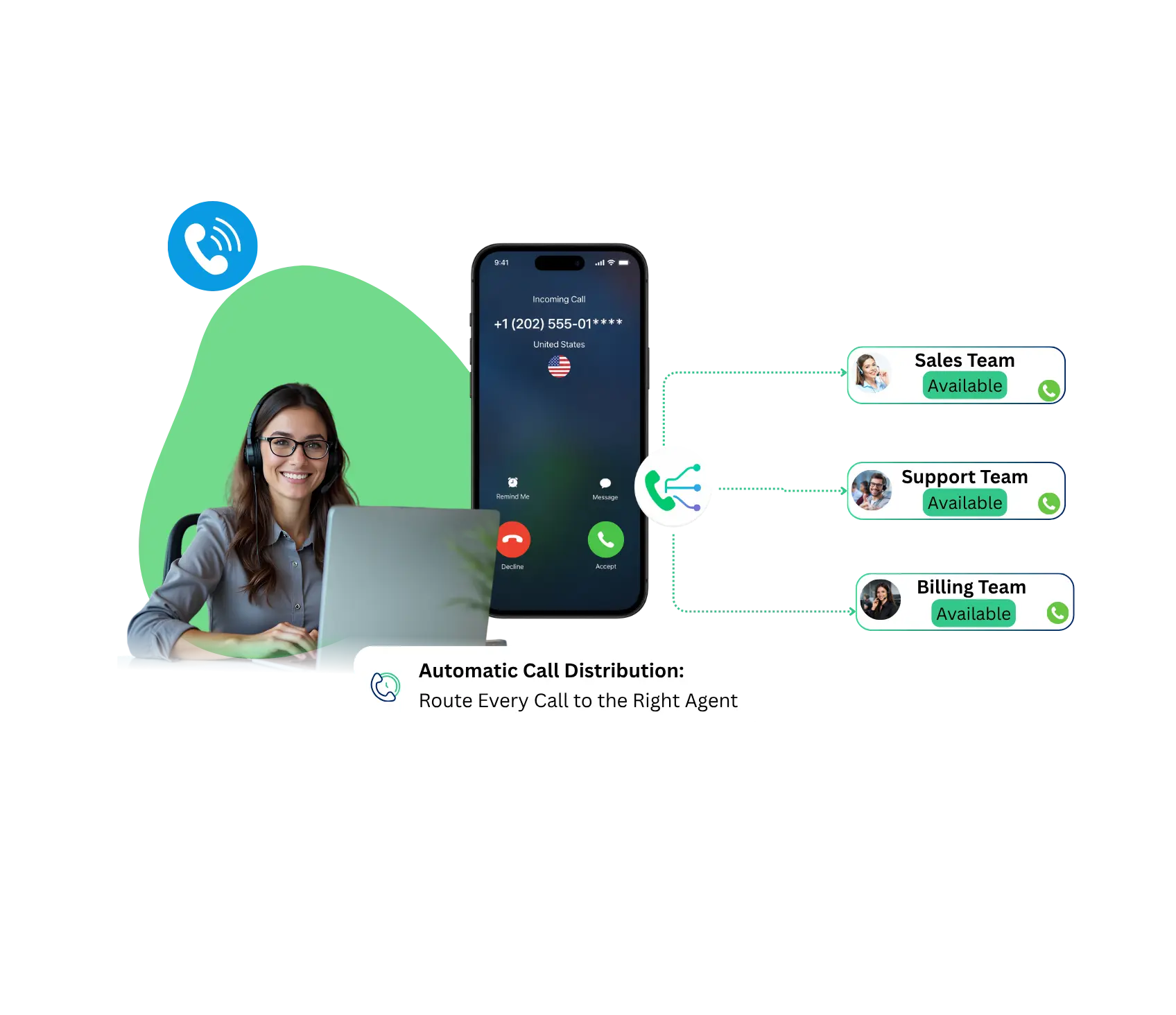
What Is Automatic Call Distribution?
Automatic call distribution is a system that automatically forwards incoming calls to the appropriate agent or department, according to rules a business establishes in advance. The system will route the call, rather than the receptionist having to physically redirect each call or have the calls ring at random desks until someone answers.The rules that govern this type of routing can be as simple or as complex as a business requires. Calls might route based on which number was dialed, what time it is, which agents are currently free, or even what language the caller selected from a menu. The whole point is to skip the guesswork and get callers to someone who can actually help, without a human having to sort every call by hand.
Before this kind of system existed, businesses relied entirely on a receptionist’s judgment, or worse, just let phones ring at every desk until someone happened to answer. That approach worked fine for a five-person office, but it fell apart fast the moment call volume picked up or the team started working across different locations.
How Our ACD Software Works?
At a basic level, ACD software follows a clear path every time a call comes in:
Incoming call → IVR → identify caller → routing → available agent/queue → call monitoring. Each step happens in a fraction of a second, but knowing what’s happening behind the scenes makes it easier to trust the system instead of treating it like a black box.
1→
Incoming Call
The second someone dials your number, the call goes to the system before it ever gets to a person.
2→
IVR
A quick menu greets the caller: support, billing, sales, so the system already knows roughly what this call is about before routing it anywhere.
3→
Identify Caller
Then the system checks whether that number has called before. It brings up any existing account or history so agents aren’t starting from scratch.
4→
Routing
By knowing the time of day, the availability of agents, and which department the call comes from, the software knows where to route the call.
5→
Agent or queue available
If the right agent is free, the call connects immediately. If not, good ACD software drops the caller into a queue with an estimated wait time instead of leaving them wondering if the call went through.
6→
Call Monitoring
Once connected, the system keeps tracking the call in the background, logging duration, outcome, and performance data that managers can review later.
This all happens instantly, without anyone behind the scenes lifting a finger. That’s really the value of ACD software; it replaces a manual process that used to depend entirely on a receptionist’s memory and timing.
ACD Phone System for Modern Business
Whether it’s a small support team or a call center with fifty agents, the core need doesn’t really change: calls need to reach the right person fast, without a customer having to repeat themselves three times along the way.
An ACD phone system also scales in a way that manual call handling never could. Adding a new department or agent doesn’t mean retraining a receptionist on new transfer rules; it just means updating the routing logic in the system. For businesses juggling multiple locations, time zones, or product lines, it becomes the thing quietly keeping everything organized behind a single number.
This is even more important for remote or hybrid teams that don’t share an office and can’t easily redirect a call. An ACD phone system doesn’t care where an agent is physically sitting; it just needs to know they’re available. A support agent working from home gets treated the same as one sitting in a main office, which is honestly how it should work in 2026.
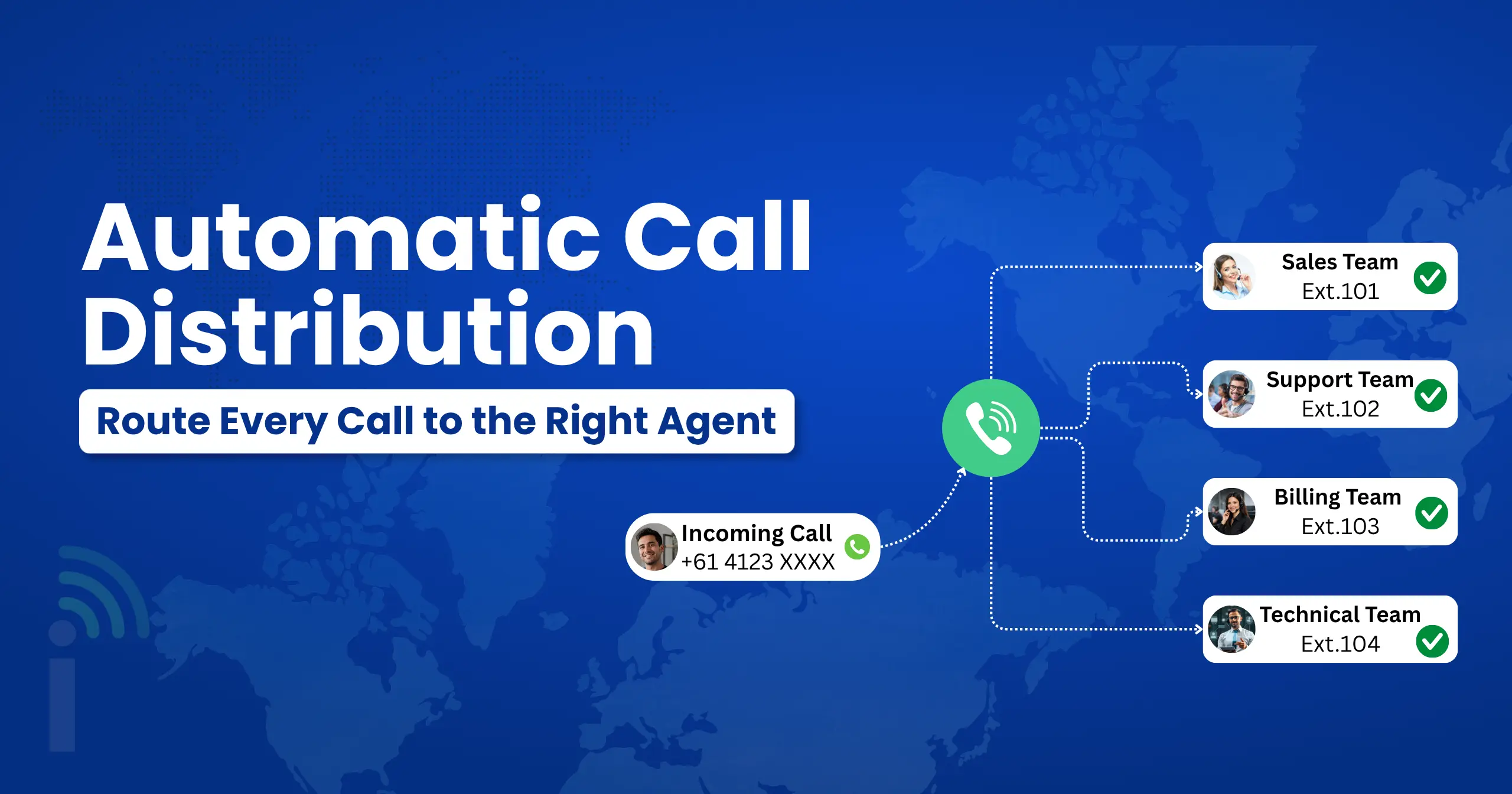
Key Features of Automatic Call Distribution
A genuinely useful setup for this kind of routing usually includes a few core pieces working together:
Skill-Based Routing
Calls go to the agent best equipped to handle that specific issue, not just whoever's free.
No calls are lost or dropped
Queue management is provided, and callers are informed of the wait time.
Overflow Handling
Calls can be automatically queued to other agents or teams in a different department as they start to flood their queues.
Real-time Reporting
Managers can see call volumes, wait times, and agent load in real time and not as a report
These pieces don’t need to be complicated to be effective. Even a basic automatic call distributor covering these fundamentals tends to outperform manual routing by a wide margin.
Advantages of Automatic Call Distribution Service
- Faster resolution: Callers get to the right person the first time, instead of getting transferred around.
- Less agent frustration: Nobody is stuck or gets on hold taking calls for another department all day.
- Improved Customer Experience: Shorter waits and fewer transfers usually result in customers being happier when they receive service.
- Scalable: Easier to scale up with agents and departments without having to rebuild the entire system.
- Clearer visibility: Managers get real data on where bottlenecks are happening instead of guessing.
Together, these benefits are why so many growing teams eventually replace manual call handling with a proper automatic call distributor the moment volume starts to pick up.
Who Actually Needs This
Automatic call distribution isn’t just for massive call centers with hundreds of agents. It shows up in a lot of everyday setups people don’t always associate with the term:
- Customer support teams juggling billing, technical, and general inquiries all on one main line.
- Sales teams who need inbound leads routed to whoever’s free instead of piling up on one person’s desk.
- Businesses with multiple offices and locations with the need to connect to the right office based on caller location.
- Healthcare offices that categorize appointments, inquiries for prescriptions, and urgent calls.
- Any growing business that’s outgrown a single receptionist manually answering and transferring every call.
If any of that sounds familiar, there’s a decent chance manual call handling is already costing more time than most people realize.
Why Choose Dialinger as Your Automatic Call Distributor
If you’re looking for an automatic call distributor that doesn’t require a massive setup process, Dialinger’s phone IVR feature handles the routing logic automatically, sending callers to the right department the moment they dial in. Paired with live call monitoring, managers can watch how calls are flowing in real time and step in if something needs attention.
For teams running a full support operation, Dialinger’s virtual call center solution brings the routing, queueing, and reporting together in one dashboard, so nothing depends on a receptionist manually sorting calls all day. If call volume is your biggest concern, call traffic insights show exactly where calls are piling up and why. You can also book a demo to see how the whole setup works before committing to anything.
At the end, automatic call distribution isn’t about replacing your team; it’s about making sure every call actually reaches someone who can help, without wasting the caller’s time or your agents’ patience getting there.
Frequently Asked Questions (FAQs)
Define Automatic Call Distribution.
An automatic call distribution system is used to direct an incoming call to the appropriate agent or department based on a set of rules. Reduces waiting times, unwarranted transfers and manual call taking.
So what's the difference between ACD Phone System and a Virtual Receptionist?
An ACD phone system will automatically route calls to the appropriate agent, whereas a virtual receptionist will answer calls and assist in directing the requests. They are able to collaborate to provide a more seamless caller experience as well.
What is the price of ACD Software?
The pricing model for ACD software varies according to the providers, users, features and number of calls. When considering plans, compare routing, IVR, analytics, integrations, and more features you need.
How to Select the Correct Automated Call Distributor?
Check for a features such as call routing, simple setup, better queue management, integration systems and pricing options, And select a system that works with your current team and can expand along with your call volume.