Call Deflection: Cut Call Volume and Keep Customers Happy
Picture your support line on a Monday morning. Half the calls are the same three questions: where’s my order, how do I reset my password, and what time do you open. Your agents answer them again and again, while customers with real problems wait in the queue. That’s the exact mess call deflection is meant to fix. It’s about giving people a faster way to get simple answers, so your team can spend its time on the calls that really need a person. Done well, everybody wins. We’ll walk through how it works, what to measure, and how to do it without making customers feel like they’re talking to a wall.

What Is Call Deflection?
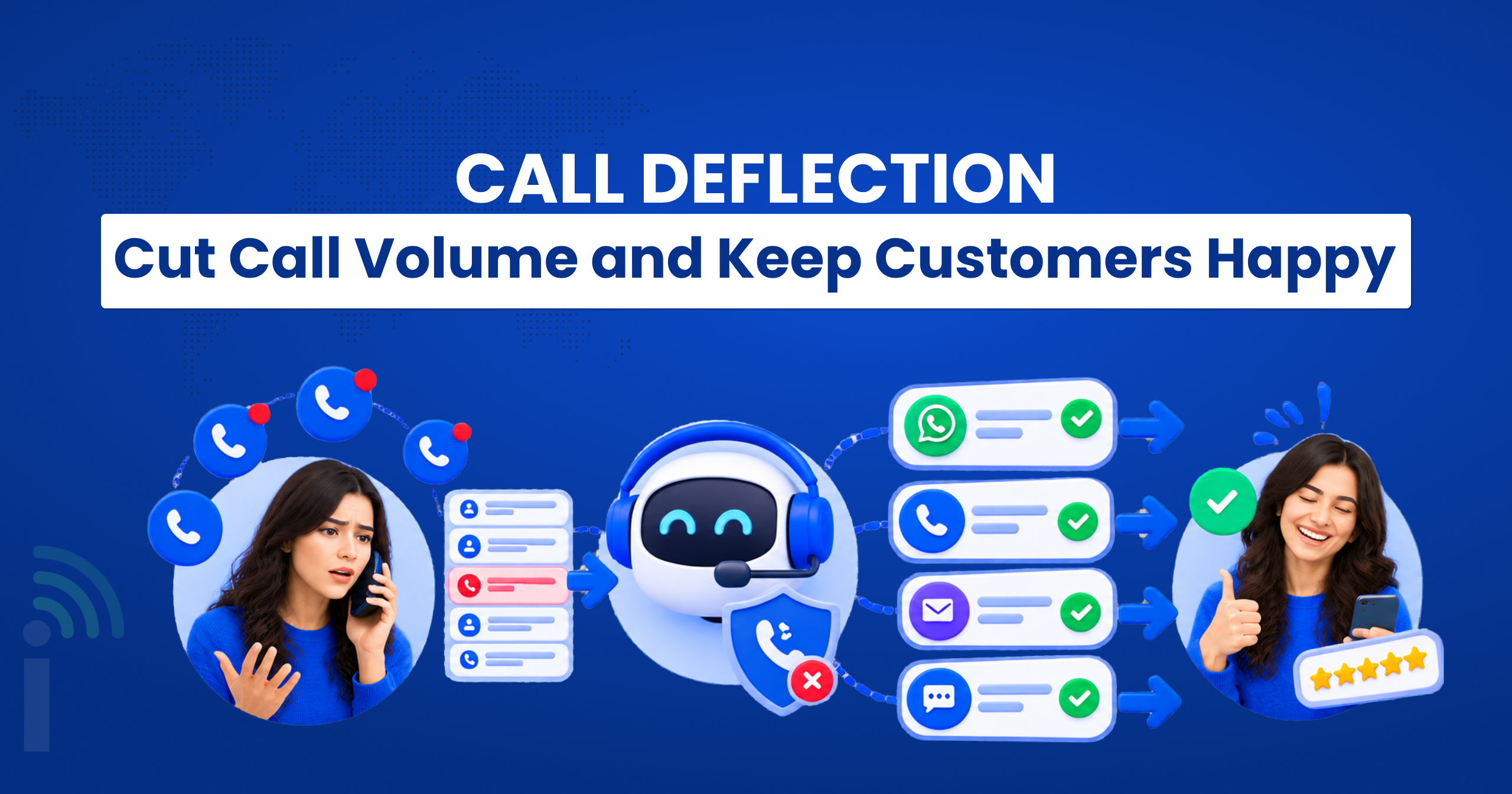
It’s the practice of steering customers toward self-service options, like a help page, a chatbot, a text message, or an automated phone menu, so they can solve simple problems without speaking to an agent. The word “deflection” can sound like you’re dodging customers, but that’s not the point. The point is to give people the quickest route to an answer and keep live agents free for the conversations that matter.
Think about it from the customer’s side. Someone who finds the answer in thirty seconds on a help page is happy. Someone who waits twenty minutes just to hear your opening hours is not. It’s really about making the easy path the first path.
Here’s a small example. A customer texts your number asking where their parcel is. An automatic reply sends a tracking link within seconds, and the customer never has to dial a thing. Nobody waited, nobody repeated themselves, and no agent had to stop what they were doing. Multiply that by a few hundred messages a week and you can see why teams care about this.
How Does Call Deflection Work?
At heart, it’s a simple loop. Here’s how it plays out:
1→
Spot the repeat questions
Look at your call logs and tickets to find what comes up most, like order status, billing, or password resets.
2→
Offer an easier path
Put the answer where the customer already is, such as a phone menu, a text reply, a chatbot, or a help article.
3→
Guide the customer there
Use a clear message at the right moment, like “press 1 for order status,” or send a link by text while they wait.
4→
Hand off when needed
If self-service doesn’t solve it, the customer should reach a person quickly, ideally with their details already passed along.
The loop never really ends. New questions pop up every month, products change, and customers find fresh ways to get confused. Teams that do well treat it as a habit, not a project, and they keep checking whether each self-service option is still pulling its weight.
We'd Love to Hear From You
Ready to expand your business globally?
Fill out the form below, and our team will help you choose the perfect number.
Why Is Call Deflection Important for Businesses?
It might sound like a parlor trick, but call deflection does a lot more than save money. Here are six reasons it matters:
Lower costs
Fewer routine calls means fewer agent hours spent on questions a help page could answer.
Shorter wait times
When the simple calls move elsewhere, the queue clears faster for everyone.
Happier agents
Nobody enjoys answering the same question forty times a day, and people stay longer in jobs that are more interesting.
Answers at any hour
Self-service doesn’t sleep, so customers can get help at midnight or on a weekend.
Better use of skills
Your best agents spend their time on tricky or sensitive problems, where a human voice really counts.
Room to grow
You can handle more customers without hiring at the same pace.
There’s a customer benefit hiding in all of this too. People generally don’t want to phone a company. They want the problem solved with as little effort as possible, and a good self-service option gives them exactly that.
Call Deflection Strategies That Actually Work
Not every tactic suits every business, but these call deflection strategies show up again and again in teams that get good results. Start with the one that matches your most common calls.
- A clear help center: Write short, searchable answers to your top questions, and keep them current.
- A short phone menu: Keep it to a few simple options, and put the most common request first.”
- Text message links:While still on the phone with the customer, send the order tracker or the reset page directly to the customers phone.
- A chatbot for simple questions:Let it do the basic stuff, but with an easy way to get to a person.
- Callback options: Give customers the option of a call back instead of holding so they don’t get frustrated and hang up and redial.
- Proactive updates: Tell customers about delays, outages, and order changes before they ask, and use reminders to automate call deflection at the source.
You don’t need to do all six at once. Pick the one that fits your most common calls, try it for a month, and see what changes. Small, steady steps beat a big launch that nobody has time to maintain.
Call Deflection Rate: What It Is and Why It Matters
Your call deflection rate is the share of customer contacts that get solved through self-service instead of reaching a live agent. If 1,000 customers try to get help and 300 solve it on their own, your rate is 30 percent. It tells you whether your self-service options are actually working, and it’s one of the clearest numbers to watch if you want to improve call deflection over time. A word of caution, though: a high number isn’t automatically a good one. If customers give up and call back angry, they might be counted as deflected when nobody really helped them.
Here’s why it deserves your attention:
- It shows if self-service works: A rising rate usually means customers are finding what they need.
- It ties to costs: Fewer live calls usually means lower handling costs.
- It needs context: Pair it with satisfaction scores and repeat-call numbers, so you know customers are happy and not just gone.
- It points to your next fix: A low rate on one topic tells you exactly which help content needs work.
How to Automate Call Deflection Without Losing the Human Touch
Automation is useful, but customers can tell when it feels cold. The trick is to automate call deflection for the simple stuff and keep a real person one step away for everything else. Four habits help:
Automate only the simple questions
Order status, opening hours, and password resets are good candidates. Complex or emotional issues are not.
Write like a person
Skip the stiff scripts. Short, friendly wording makes a menu or a chatbot feel much less robotic.
Always offer a way out
Let customers reach a person with one press or one click, with no maze to get through.
Pass the context along
If the customer does reach an agent, share what they already tried so they don’t have to repeat themselves.
How to Improve Call Deflection Results
If you want to improve call deflection results, don’t guess. Check your call deflection rate by topic, see where customers drop out, and fix the weak spots one at a time. Here are six things to try:
- Review call reasons every month: The top reasons change, and your self-service options should change with them.
- Fix confusing content: If customers read a help article and still call, the article needs rewriting.
- Shorten your phone menu: Too many options send people straight to the “speak to an agent” button.
- Test with real customers: Ask a few people to try finding an answer, and watch where they get stuck.
- Make self-service easy to find: Link to help pages in emails, receipts, and on your contact page.
- Follow up on repeat calls: When someone calls back within a day, it usually means the first answer didn’t work.
It also helps to ask your agents what they hear. They know which questions keep coming back, which help pages confuse people, and which menu options send customers in circles. A short chat with your team can save weeks of guessing.
Call Deflection Best Practices for Better Customer Support
Call deflection works best when you treat it as part of good support, not a replacement for it. Whether you’re choosing call deflection strategies or just tweaking a menu, these habits keep the customer at the center:
- Start with customer needs: Build around the questions people actually ask, not around a cost target.
- Be concise and accurate:Using help pages that are out of date causes more calls than they save.
- Keep human assistance readily available: A person should never feel compelled to be in a loop with no way to break out.
- Monitor satisfaction by the numbers: Monitor call deflection with customer ratings and repeat calls.
- Train your agents on the tools: When agents know the self-service options, they can guide customers to them with confidence.
One last thing: be honest about what automation can’t do. Some calls are upset, urgent, or complicated, and those deserve a person right away. If you protect those moments, customers will forgive a lot of small friction everywhere else.
Where Dialinger Fits In
If you’re building call deflection into your support setup, Dialinger is worth a look. It’s a cloud-based communication platform, and its call center software helps teams manage calls from one place. Call analytics can show why customers call and which topics keep coming back, call forwarding helps route calls to the right person, a messaging service covers texts, and CRM integration helps agents see customer details. Together, those tools can support your call deflection strategies and make it easier to automate call deflection for simple requests while keeping people ready for the rest. Ask on a demo which self-service options are available for your setup and how you could improve call deflection results over time.
Frequently Asked Questions (FAQs)
Does call deflection mean ignoring customers?
Not if it’s done right. The goal is to give people a faster way to get a simple answer, not to block them from reaching you. If someone needs a human, they should be able to get one without jumping through hoops. When customers feel stuck in a loop, that’s bad design, not good deflection.
What’s a good call deflection rate?
There’s no single right number, because it depends on your industry and what customers call about. Rather than chasing a figure you read somewhere, compare your call deflection rate month to month and by topic. Then check it against customer satisfaction and repeat calls. A rising rate with happy customers is a good sign.
Will customers get annoyed by automated phone menus?
Some will, if the menu is long, confusing, or hides the option to speak to someone. Keep it short, put the most common request first, and always include a quick way to reach a person. Friendly, plain wording also helps a lot.
How do I know if customers are actually getting help?
Look beyond the deflection number. Check whether people call back within a day, read the same help article several times, or give low ratings after using self-service. Those are signs the answer didn’t work. Asking customers a quick “Did this help?” question also tells you a lot.