Call Queue Management Software: How It Keeps Every Caller From Hanging Up
Anyone who’s called a business during a busy hour knows the feeling of sitting on hold, wondering if anyone’s actually going to pick up. That waiting experience isn’t random. It’s shaped entirely by whether a business is using proper call queue management software or just letting calls pile up and hoping for the best.
Call queue management software is the system that decides what happens to a caller the moment every agent is busy. Instead of a dropped call or an endless ring, it holds the caller in an organized line, gives them an idea of how long they’ll wait, and connects them the second someone’s free. Get this piece wrong, and you lose customers before they’ve even spoken to anyone.

What Is a Call Queue, and Why Does It Matter?
A call queue is simply the line callers wait in when every available agent is already on a call. Without one, callers either get a busy signal, get dropped, or ring endlessly with no update on when they’ll actually be helped. None of those outcomes leave a good impression.
Call queue management software organizes that waiting line properly. Callers hear hold music or a message, sometimes with an estimated wait time, and they’re connected in order the moment an agent becomes free. It sounds simple, but the difference between a business with this system and one without shows up immediately in customer satisfaction. People are far more patient waiting three minutes when they know it’s three minutes than waiting an unknown length of time wondering if they’ve been forgotten.
This matters even more once a business grows past a handful of daily calls. A support line handling ten calls a day barely needs structure, but the same line handling two hundred calls without proper call queue management software quickly turns into chaos, missed calls, frustrated customers, and agents who have no idea who’s actually waiting.
Call Queue Software vs. Manual Call Handling
Before call queue software became common, businesses handled overflow calls with whatever they had: an overworked receptionist juggling multiple lines, or calls just going unanswered during busy periods. Neither approach scales well past a handful of calls a day.
Call queue software changes that completely. It automatically holds excess calls in order, applies routing rules, and keeps things moving without a human manually managing every single call. For a small team, this might mean the difference between losing a customer to a competitor and actually keeping them on the line long enough to get help. For a larger operation, it’s the only realistic way to handle dozens or hundreds of calls without chaos.
The truth is that manual call handling was never really designed to scale. It worked when call volume was low, but the moment a business grows even slightly, cracks start showing, callers get lost, agents get overwhelmed, and there’s no clear picture of what’s actually happening across the queue.
How Call Queuing Actually Works
At its core, call queuing follows a fairly simple logic, even though the technology behind it can get sophisticated. When a call comes in and no agent is immediately free, the system places that caller into a queue rather than dropping the call or leaving it unanswered.
From there, call queuing typically follows a few steps.The caller might be notified when they are in the queue or of the estimated waiting time. The system looks for the next available agent, which may be by skill or department, and will connect the call when one is available. Others allow calls to overflow to a second line of agents or provide a call-back service rather than putting anyone on hold for extended periods should wait times become too long.
This process occurs automatically, and the business does not have to have someone monitoring the wait list and the next person in line. The better that managers can see into the queue, the better they can know what is happening, how long the line is, how long it has been in the waiting line, and where it is becoming congested.
Call queuing should be noted as not a one-size-fits-all arrangement. A small support team may make a determination as to the order of calls based on simple first-come, first-served logic, while a larger operation may require calls to be sorted by priority, language, or the department that the caller really does need. The foundation remains exactly the same; the rules that are added on top can be as detailed as a business wants them to be.
We'd Love to Hear From You
Ready to expand your business globally?
Fill out the form below, and our team will help you choose the perfect number.
Choosing the Right Call Queue Management System
Not every call queue management system is built the same way, and picking the wrong one can leave you right back where you started, callers stuck waiting with no clear structure. Some platforms are little more than a hold button with music attached, while others give a business real control over how calls move through the queue and how staff respond to changing volume throughout the day.
When evaluating a call queue management system, a few things matter more than flashy features:
Real-time visibility
Managers need to see queue length and wait times as they happen, not after the fact.
Flexible routing
Calls should be able to route by skill, department, or priority, not just first-come-first-served.
Overflow handling
If the queue gets too long, calls need somewhere else to go, whether that's another team or a callback option.
Reporting
A good call queue management system tracks patterns over time, so you know when to add staff before a queue becomes a problem.
Changing routing rules or queue settings shouldn’t require a support ticket every time something needs adjusting.The right system doesn’t just hold calls; it actively helps a business understand its own call volume and staff accordingly. Over time, that visibility tends to matter more than any single feature, since it’s what lets a team catch problems before customers start noticing them.
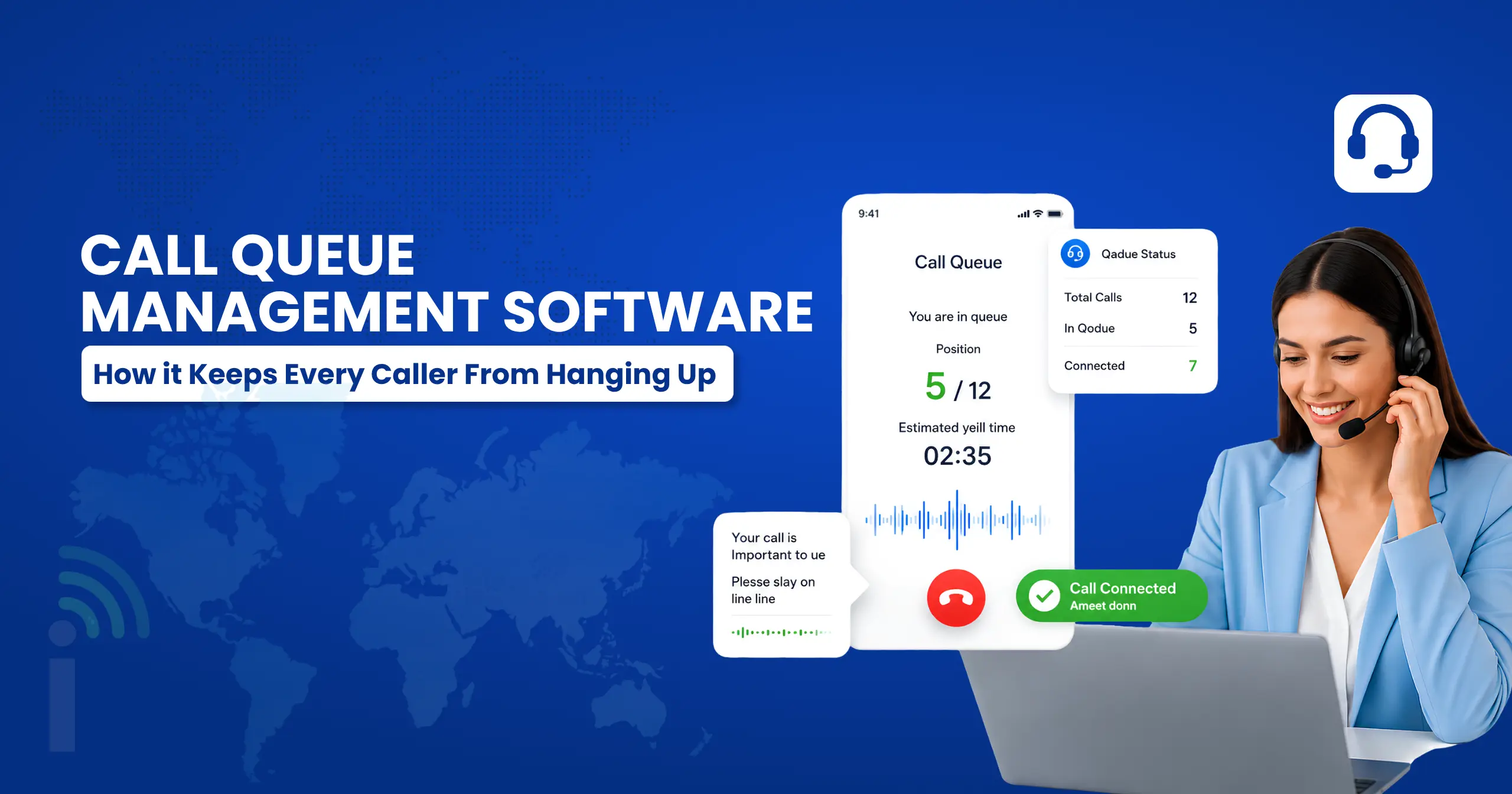
Call Center Queue Best Practices
Even good software needs the right setup behind it. A well-run call center queue usually follows a few consistent habits that keep wait times reasonable and callers from getting frustrated.
Setting realistic expectations matters most. If your call center queue tells someone their wait is two minutes and it stretches to fifteen, trust erodes fast. It’s better to slightly overestimate wait times than promise something the team can’t deliver.
Staffing based on real data helps too. A call center queue with solid reporting shows exactly when call volume spikes, letting managers schedule accordingly instead of guessing. And giving callers an option, like a callback instead of holding, tends to reduce frustration significantly, since nobody wants to sit listening to hold music for ten minutes if they don’t have to.
None of these practices require anything fancy. They just require the right call queue management software actually being used properly, rather than switched on and forgotten about. A lot of businesses invest in a good system and then never revisit the settings, which means the queue stops matching how the business actually operates six months later.
Common Types of Call Queue Software Features
Beyond the basics, most solid platforms include features that make daily operations noticeably smoother:
- Skill-based routing: So callers reach someone equipped to actually help them.
- Callback options: So people aren’t stuck holding the line indefinitely.
- Live monitoring: So supervisors can watch queue activity as it happens.
- Historical reporting: So that trends in call volume can be observed over time.
- Multi-channel support: So that queues can be expanded beyond the telephone where necessary.
These features aren’t just nice extras; they’re usually what separates a system that genuinely helps from one that just technically works.
Signs Your Business Needs Better Call Queue Management
Not every call queue management system is built the same way, and picking the wrong one can leave you right back where you started, callers stuck waiting with no clear structure. Some platforms are little more than a hold button with music attached, while others give a business real control over how calls move through the queue and how staff respond to changing volume throughout the day.
When evaluating a call queue management system, a few things matter more than flashy features:
When callers are dropping off before they get through to an agent
Wait times or queue structure are often to blame.
Agents being overwhelmed at particular times
This typically indicates that the queue is not effectively distributing calls among the agents.
No visibility into wait times or queue length
If managers can't answer "how many people are waiting right now" instantly, the reporting side needs work.
Repeated complaints about being transferred multiple times
This often signals routing rules that haven't been updated as the business changed.
Why Dialinger Is Worth Considering
If you’re looking to put proper call queue management software behind your team, Dialinger’s phone IVR feature handles the routing logic automatically, directing callers to the right queue the moment they dial in. Paired with call on hold, callers stay in a smooth, managed wait instead of an awkward silence or a dropped connection.
For teams that want full visibility into what’s happening across the queue, Dialinger’s live call monitoring lets supervisors watch activity in real time, while call traffic insights show exactly when call volume spikes so staffing decisions aren’t just guesswork. For a broader setup covering routing on top of queuing, Dialinger’s automatic call distribution page walks through how the two work together.
If you’d like to see how it all fits your team’s setup, you can book a demo and walk through it directly before committing to anything.
At the end of the day, call queue management software isn’t about making customers wait more comfortably; it’s about making sure fewer of them have to wait at all, and the ones who do never feel forgotten in the process.
Frequently Asked Questions (FAQs)
What's the difference between call queue management software and just putting someone on hold?
Hold is just silence or music with no structure. Queue software actually tracks position, estimates wait time, and connects people in order automatically.
How does call queuing decide who gets connected first?
Usually first-come-first-served, but it can also factor in agent skill, department, or priority depending on how the rules are set up.
What's a sign that a call queue management system isn't working well?
Rising abandonment rates, callers hanging up before reaching anyone, is usually the clearest red flag something needs adjusting.
Do small businesses actually need a call center queue, or is it just for big call centers?
Even a small team benefits once call volume picks up. The problems it solves, missed calls, lost trust, show up early, not just at scale.