Call Routing Software: Getting Every Call to the Right Person
Anyone who’s ever called a business and gotten passed around three different people before finally reaching someone who could actually help knows exactly why call routing software exists. It’s the quiet system working behind the scenes deciding where a call goes the moment it comes in, so customers land with the right person the first time instead of bouncing around a company’s phone tree.
For a growing business, this stops being a nice-to-have pretty quickly. Once you’ve got more than a handful of people answering phones, leaving call routing up to chance turns into missed calls, frustrated customers, and a support team that never quite knows who’s supposed to be handling what.
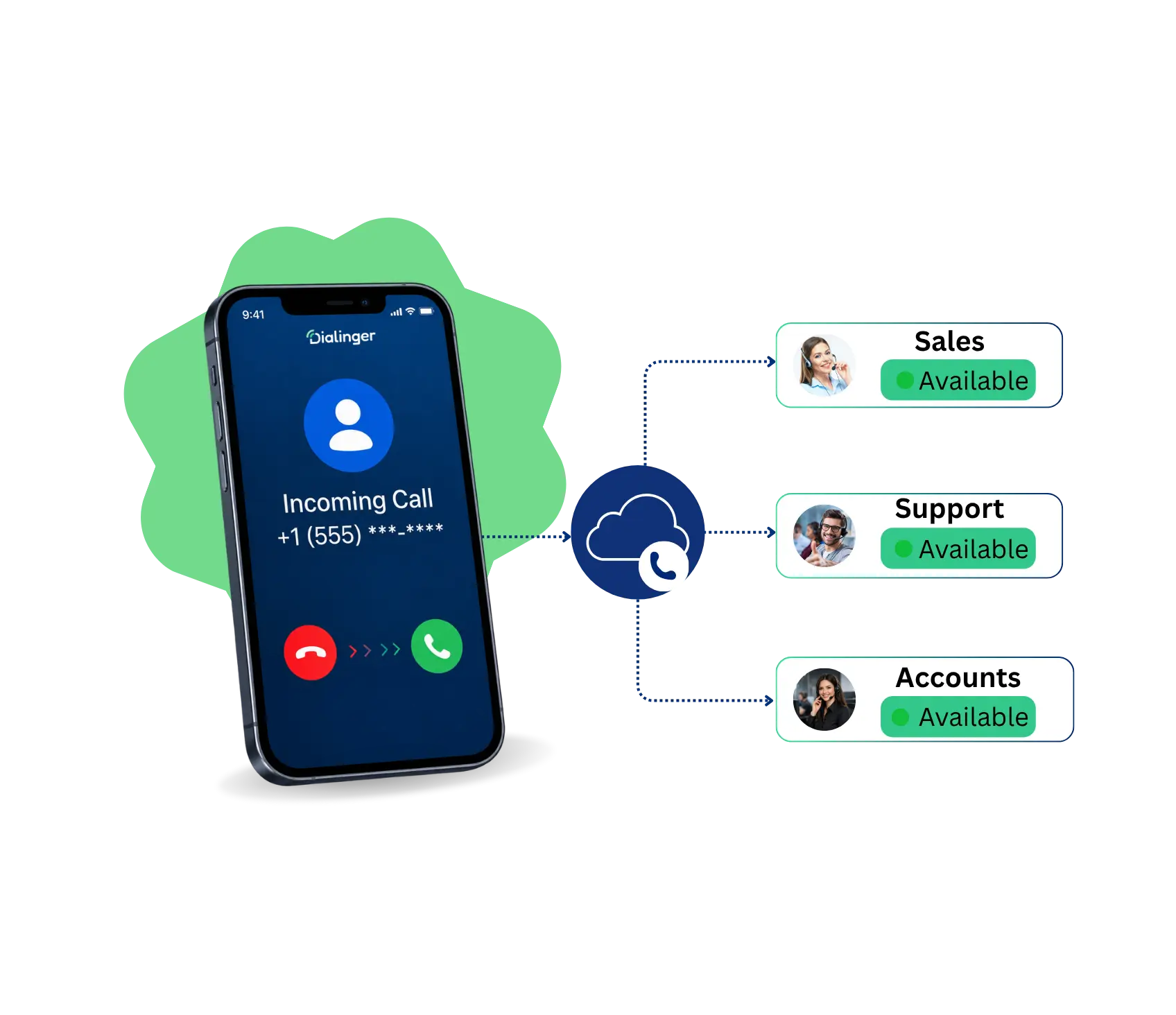
What Is Call Routing Software?
Call routing software is software that, as the name suggests, it automatically routes incoming calls to the appropriate agent, department, or extension according to rules that a business can establish beforehand. Instead of a receptionist manually transferring every single call, or calls ringing randomly at whichever desk happens to pick up, the software makes that decision instantly.
The rules behind it can be as simple or as detailed as needed. A call might route based on which number was dialed, the time of day, which agents are currently free, or even what a caller selects from a quick menu. The whole point is getting people to the right place without a human having to sort every call by hand.
Components of an IP PBX Setup
A few core pieces usually work together to make this kind of system actually function well:
- Routing rules engine: The logic layer deciding where a call should go based on the conditions you’ve set, department, time of day, caller history, and so on.
- IVR or menu system: The recorded prompts that let a caller select an option before the software decides where to send them.
- Automated call distribution: The mechanism that actually spreads incoming calls across available agents based on the routing rules, instead of piling everything onto whoever’s closest to the phone.
- Queue management: A holding system for callers when everyone’s busy, usually with an estimated wait time so nobody’s left wondering.
None of these pieces need to be complicated on their own, but together they’re what separates a genuinely useful setup from something that just technically answers the phone.
How Does Call Routing Software Work
The mechanics are simpler than they might sound. When a call comes in, the software checks it against the routing rules that have been configured, department requested, time of day, agent availability, and picks the best match in a fraction of a second.
If the ideal option isn’t available right away, a decent system doesn’t just leave the caller hanging. It moves to the next best option, drops the call into a queue with an estimated wait time, or offers a callback instead of forcing someone to sit on hold indefinitely. Everything happens automatically, without anyone behind the scenes lifting a finger, which is really the entire value of the system in the first place.
Understanding Inbound Call Routing
Inbound call routing specifically deals with calls coming into a business, as opposed to outbound calls a team might be making to leads or customers. This is usually where the biggest impact shows up, since inbound calls are often customers or prospects reaching out with a specific need, and getting them to the right place quickly shapes their entire impression of the business.
Good inbound call routing accounts for the reality that not every caller needs the same thing. A billing question, a technical issue, and a general inquiry all deserve different paths, and inbound call routing is what makes sure each one actually gets there without someone manually sorting every call as it comes in.
We'd Love to Hear From You
Ready to expand your business globally?
Fill out the form below, and our team will help you choose the perfect number.
Types of Call Center Call Routing Software
The routing logic that’s right for one business may not be right for another. Here are some common types to help you compare options:
Skill-based routing
Sends a call to the individual who has the skills needed to address the specific type of question, rather than to anyone who’s available.
Time based routing
This alters the caller routing based on the time of day, calling after hours to voicemail or another team.
Geographic routing
Directs the caller to the nearest office/agent. Ideal for companies that have multiple regional teams.
Round-robin routing
Allows calls to be distributed evenly across a set of agents, avoiding the situation where an agent is stuck with all the calls and others have nothing else to do.
Priority Routing
It enables the high-value customers/urgent issues to bypass the waiting line and get their calls handled earlier.
Most idle agent routing
Redirects the call to the agent who has been waiting the longest without making a call. This way, everyone in the group will not have to take on too much load; instead, the workload will be distributed across everyone.
Value-based routing
Recognizes high dollar customers via caller ID or account information and routes them to senior agents or a special account.
IVR based routing
Customers are given a list of options for their call and can select one of them and the call will be directed accordingly.
Most call center call routing software supports a combination of these rather than just one. This allows a business to layer them together based on the circumstances.
Comparing Call Routing With Call Forwarding
These two terms get mixed up constantly, but they’re solving different problems. Call routing decides where a call should go in the first place, often based on multiple conditions like department, skill, or time of day. Call forwarding, on the other hand, simply redirects a call from one fixed point to another, usually because the original number can’t be reached.
It’s like this: call routing is the layer that makes decisions, it determines what is the optimal destination for a call before it actually makes connection. Call forwarding is a bit more of a last resort option, forwarding the call to another number once it has been made to a different number that doesn’t answer. Many businesses use both together, routing handles the initial decision, and forwarding catches what happens when a specific destination isn’t available.
Benefits and Use Cases of Call Routing Software
There are pros and cons to a cloud PBX setup, as there are with anything. It’s worth weighing them before you commit.
Faster resolution
The caller is connected to the right person directly without being transferred multiple times.
Better team organization
Agents can take the calls they are really qualified for, and not random requests.
Better customer experience
A smooth, well-routed call makes people feel that the business really has it together.
Scalability
If a new department or new location is added to the organization, the entire phone system does not have to be rebuilt from scratch.
In terms of use cases, this shows up everywhere from customer support lines separating billing from technical issues, to sales teams routing inbound leads to whoever’s actually available, to multi-location businesses directing callers to the nearest office automatically. Pretty much any business fielding more than a handful of calls a day benefits from having this in place rather than leaving it to chance, since the alternative usually means someone quietly losing track of who’s supposed to be answering what.
Common Mistakes That Undermine Good Routing
A few patterns show up repeatedly even in businesses that put real thought into their setup:
- Overcomplicating the IVR menu: Piling on option after option until the menu itself becomes the obstacle instead of the solution.
- Ignoring after-hours scenarios: Designing a solid daytime process and forgetting what happens to calls once everyone’s gone home.
- Never testing the caller experience: It’s easy to build something that looks fine on paper but actually calling in reveals awkward gaps nobody noticed.
- Treating it as a one-time setup. Teams change, departments shift, and routing rules that aren’t revisited eventually stop matching how the business actually operates.
Avoiding these mostly comes down to treating the system as something that needs occasional maintenance, not a project you finish once and never touch again.
Why Dialinger Fits Into This
If you’re looking to put a proper system in place, Dialinger’s phone IVR feature handles the routing logic automatically, directing callers to the right department the moment they dial in. Paired with automatic call distribution, calls get spread across available agents intelligently instead of piling up on whoever happens to be free, and call forwarding covers what happens when a specific line genuinely can’t be reached.
In the end, call routing software isn’t about replacing the people answering phones, it’s about making sure every call actually reaches someone who can help, without wasting a caller’s time or an agent’s patience getting there.
Frequently Asked Questions (FAQs)
What is call routing software?
It’s software that takes an incoming call and automatically sends it to the right person or department, based on rules a business sets up ahead of time. So instead of a receptionist manually transferring every call, or calls just landing on whoever’s closest to the phone, the system figures out the best match instantly.
What happens if no agent is available to take the call?
A good system doesn’t just leave people hanging. It usually drops the caller into a queue with an estimated wait time, offers a callback option instead, or moves the call to the next best available agent, so nobody’s stuck sitting on hold with no idea what’s happening.
Is inbound call routing different from regular call routing?
Inbound call routing is specifically about calls coming into the business, from customers or prospects reaching out, rather than calls a team is making outward. Since these are often people with a real need, getting them to the right place quickly matters a lot for how they see the business overall.
What are the biggest mistakes businesses make with call routing?
A few show up again and again: piling too many options into the IVR menu, forgetting to plan for after-hours calls, never actually testing what it feels like to call in, and setting the whole thing up once and never touching it again even as teams and departments change.