Digital Transformation Tools For Growing Businesses
Every business eventually hits a wall where spreadsheets, manual processes, and disconnected apps just stop working. That’s usually the moment leadership starts looking into digital transformation tools, not because it’s trendy, but because the old way genuinely can’t keep up with how fast things move now. After spending years watching companies either get this right or completely botch it, one thing is clear: the tools matter less than how thoughtfully they’re chosen and rolled out. A shiny new platform in the hands of a team that never gets proper training does about as much good as the spreadsheet it replaced.
This solution breaks down what these tools actually are, where digital tools fit into the bigger picture, how software choices differ from strategy, and what it really takes to implement change that sticks, without the fluff you usually find in generic listicles. Think of it as the version of this topic written by someone who’s actually sat through the messy rollouts, not just the polished case studies vendors like to show off.

What Are Digital Transformation Tools?
Digital transformation tools are the software and platforms businesses use to shift away from manual, paper based, or outdated processes toward something faster and more connected. This covers a wide range, cloud storage, automation platforms, communication tools, CRM systems, analytics dashboards, basically anything that helps a business run on digital infrastructure instead of spreadsheets and sticky notes. Some businesses picture this as one giant overhaul, but in reality it’s usually a collection of smaller, connected upgrades happening over time.
What separates a genuinely useful tool from a shiny distraction usually comes down to one question: does it actually remove friction from how people work, or does it just add another login to manage? The good ones tend to blend into daily workflows so naturally that employees barely notice the shift after the first few weeks.
Digital Tools The Everyday Building Blocks
Digital tools, in a more general sense, are the applications that teams use every day, but which may not be part of a larger transformation strategy, just as much as larger platforms are.
This includes such features as shared calendars, cloud storage of shared files, messaging systems, and basic automation scripts. They’re not glamorous, but they’re the foundation everything else gets built on. A business trying to roll out a massive transformation initiative while ignoring these basic digital tools usually ends up with gaps, senior leadership using fancy dashboards while frontline staff are still emailing spreadsheets back and forth. It’s a strange but common pattern, expensive software at the top, duct tape and workarounds everywhere else.
Getting the fundamentals right first tends to make everything that follows a lot smoother. Solid tools at the ground level are what make bigger software investments actually pay off down the line.
Digital Transformation Software The Backbone of the Shift
This is where things get more structured. Digital transformation software usually refers to larger, more comprehensive platforms, enterprise resource planning systems, customer relationship management suites, workflow automation engines, that businesses adopt to unify processes across departments rather than just handling one small task.
The appeal is obvious on paper: one system, connected data, fewer manual handoffs between teams. In practice, digital transformation software only delivers on that promise when it’s actually configured around how the business really operates, not some generic template pulled straight from a vendor’s demo. Plenty of companies buy expensive software, skip the customization work, and end up with a fancy system nobody actually uses properly.
The businesses that get real value tend to treat digital transformation software as an ongoing investment, not a one time purchase. Systems need tweaking as the business grows, and that ongoing attention is usually what separates companies that see real ROI from ones that quietly regret the purchase a year later. Vendors rarely emphasize this part during the sales process, for obvious reasons.
What do Teams need Business Transformation Software?
It’s worth drawing a distinction here, because these terms get used interchangeably a lot more than they should. Business transformation software isn’t just about digitizing existing processes, it’s about rethinking how the business actually operates, sometimes technology is just the enabler, not the whole story.
A company might implement business transformation software and still fail to see meaningful change if the underlying processes, org structure, or company culture never actually shift. The software can automate a broken workflow just as easily as it automates a good one, it doesn’t fix bad processes on its own. Real transformation software works best paired with an honest look at whether the current way of doing things even makes sense anymore, before just digitizing it as is.
This is genuinely where a lot of companies waste money. They buy powerful business transformation software expecting it to fix organizational problems that have nothing to do with technology at all.
We'd Love to Hear From You
Ready to expand your business globally?
Fill out the form below, and our team will help you choose the perfect number.
Implementing Digital Transformation where Most Companies Struggle
Here’s the part nobody likes talking about. Implementing digital transformation is where good intentions go to die if it’s rushed or handled without a real plan. Buying the software is honestly the easy part, getting people to actually change how they work is where things fall apart. Here’s where most companies trip up, laid out step by step.
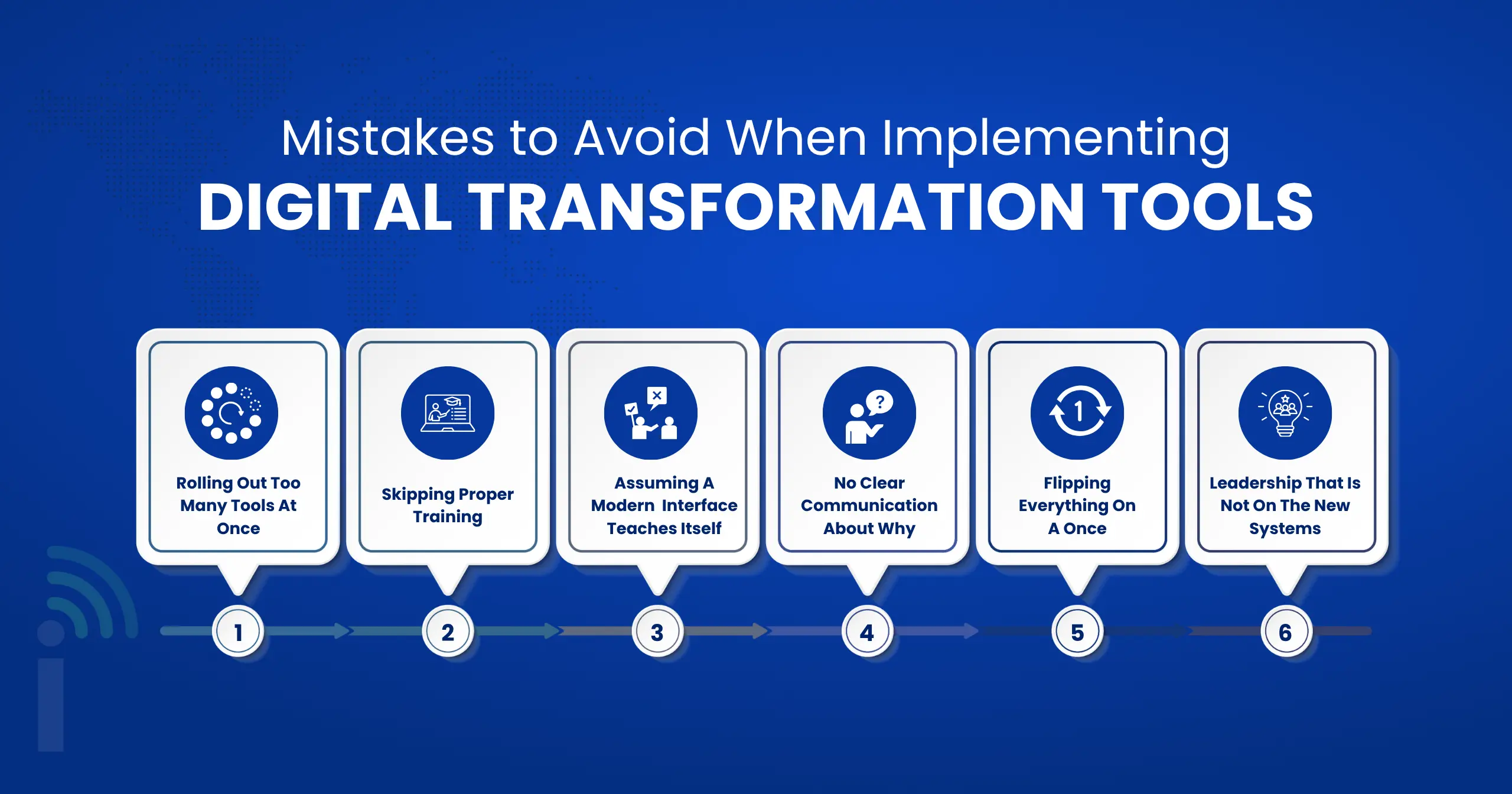
- Rolling out too many tools at once: Announcing five new systems in the same quarter almost guarantees at least a couple of them get quietly ignored. Change fatigue is real, and people can only absorb so much new process at one time.
- Skipping proper training: A single onboarding email doesn’t count as training. When employees aren’t shown how to actually use a system in the context of their own job, they default back to the old way within weeks.
- Assuming a modern interface teaches itself: A clean looking dashboard doesn’t automatically mean people know what to do with it. Intuitive design helps, but it doesn’t replace someone walking a team through their actual day to day use case.
- No clear communication about why: When people don’t understand the reason behind a change, they treat it as extra work rather than something worth adjusting to. A short explanation of the actual problem being solved goes a long way.
- Flipping everything on at once: Phased rollouts give teams room to adjust and give the business room to fix mistakes before they affect everyone. Going all in on day one tends to multiply whatever goes wrong.
- Leadership that is not on the new systems: There is nothing that kills the adoption faster than seeing their leaders on the old spreadsheet. If leadership doesn’t change completely, there seems to be little reason for any one else to change.
Successfully implementing digital transformation really comes down to these unglamorous basics, communication, pacing, training, and leadership actually walking the walk. Skip any of these, and even the best software in the world won’t move the needle.
Key Benefits of Digital Transformation Tools
When implementation actually goes well, the payoff tends to show up in a few consistent places.
Faster
decision making
Centralized data means leadership isn’t waiting on someone to manually pull numbers together before making a call.
Reduced manual
work
Automation handles the repetitive stuff, freeing people up for work that actually requires judgment.
Better customer experience
Connected systems mean customers aren’t repeating themselves to five different departments.
Easier
scaling
Digital transformation tools built with growth in mind mean adding new users or locations doesn’t require rebuilding everything from scratch.
Improved
visibility
Real time dashboards replace guesswork with actual data, which makes spotting problems early a lot easier.
Digital Customer Service For Better Customer Service
Most companies talk about improving customer service like it’s just another software project. Buy a new tool, flip the switch, and suddenly everything runs smoother. But anyone who’s actually tried it knows that’s not how it works.Customers still get frustrated when they have to repeat themselves. Agents still struggle when systems don’t talk to each other. And the “self-service” options that looked great in demos often end up being ignored because they don’t actually solve the problem people are having.Digital customer service isn’t about replacing people with chatbots or dashboards. It’s about giving both customers and your team a faster, clearer, less painful way to get things done without making the experience feel cold or robotic.
Common Challenges When Adopting New Systems
But with good intentions, a few obstacles pop up across all industries.
The biggest one is probably resistance to change. People have workflows they’re comfortable with, and no amount of leadership enthusiasm alone will completely eliminate that friction. Budget overruns are also common, as companies often underestimate the cost of proper training and customization, not just the software license itself. Data migration headaches are another frequent issue, moving years of information from old systems into new ones rarely goes as smoothly as a vendor’s sales pitch suggests it will.
None of these challenges are unsolvable, but pretending they won’t happen is usually where projects quietly go off the rails. The companies that navigate this well tend to budget extra time and money upfront specifically for the messy parts, rather than assuming everything will go according to the vendor’s timeline.
How to Choose the Right Digital Transformation Tools
A few practical questions cut through most of the noise when evaluating options.
- Does it actually solve a problem your team has today, rather than one a salesperson invented during a pitch?
- Will it integrate with systems you’re already using, or will it create yet another disconnected silo? Is the pricing structure honest about total cost, including training and support, not just the sticker price?
- And can your team realistically learn it within a reasonable timeframe without grinding productivity to a halt for months?
Answering these honestly before signing a contract saves a lot of regret later. The best digital transformation tools for one company might be completely wrong for another, it really depends on team size, existing infrastructure, and what problem actually needs solving first. A twenty person company and a two hundred person company rarely need the same platform, even if they’re in the exact same industry.
Why Dialinger Fits Into Your Digital Transformation Journey
Communication is usually one of the first things worth digitizing, since it touches every department and every customer interaction. Dialinger brings calling, texting, and customer conversations into one connected platform, which is exactly the kind of foundational piece that makes broader digital transformation tools actually work well together instead of operating in isolation.
Rather than juggling a separate phone system, a separate texting app, and disconnected customer records, Dialinger keeps communication centralized, which fits naturally into any serious approach to implementing digital transformation across a growing business. If you’re building out your tech stack and want a communication platform that won’t become another disconnected silo down the line, Dialinger is worth a look. You can book a demo and see how it fits into what you’re already building.
Frequently Asked Questions (FAQs)
What are digital transformation tools?
Basically, they’re the software and platforms businesses use to move away from manual, paper based work toward something faster and more connected. Think cloud storage, automation platforms, CRM systems, communication tools, anything that helps a business run on actual digital infrastructure instead of spreadsheets and sticky notes.
What's the difference between digital tools and digital transformation software?
Digital tools are more the everyday stuff, shared calendars, cloud file storage, messaging apps, the small things teams use constantly without really thinking about them. Digital transformation software is bigger and more structured, think ERP systems or workflow automation engines meant to connect entire departments together.
Why do so many companies struggle with implementing digital transformation?
Honestly, because buying the software is the easy part. The hard part is getting people to actually change how they work day to day. Rolling out too much at once, skipping real training, and assuming a clean interface teaches itself, that combination is basically a recipe for failure.
What are the actual benefits once this is done right?
Faster decisions since leadership isn’t waiting on someone to manually pull numbers together, less manual grunt work thanks to automation, a smoother experience for customers who aren’t repeating themselves five times, and honestly, just better visibility into what’s actually happening across the business.