How to Port a Number Keeping Your Existing Phone Number
You’ve found a better phone plan, or a better business phone system, but one thing keeps you from switching: your number. It’s on your business cards, your website, your customers’ contacts, and probably a few of your accounts. Changing it feels like a big deal. The good news is that you don’t have to. If you know how to port a number, you can switch providers and keep the one everyone already knows.
What Is Phone Number Porting?
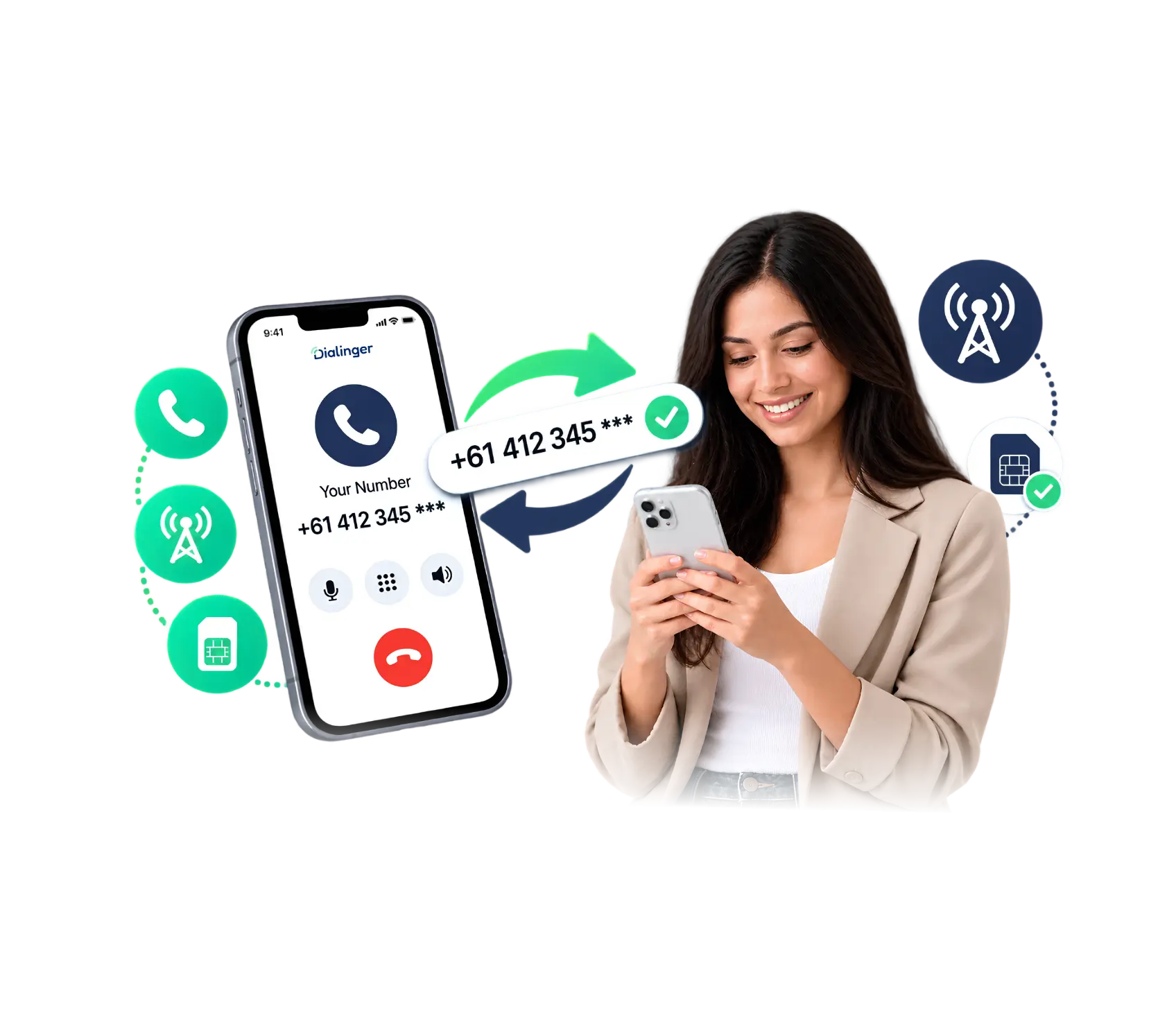
Phone Number Porting is nothing more than the act of transferring your current number from one carrier to another without changing a single digit. Your old provider lets go, your new provider takes over, and callers keep dialing the same number. It works between mobile carriers, landline companies, and VoIP providers.
People do it for better prices, better coverage, or better features. Some want to port number to VoIP so their number works on apps and laptops instead of one SIM card or one desk phone. The big win is continuity. Customers, friends, and partners never have to learn a new number, and you can switch whenever something better comes along. Once you know how to port a number, a provider change stops being scary.
How to Port a Number
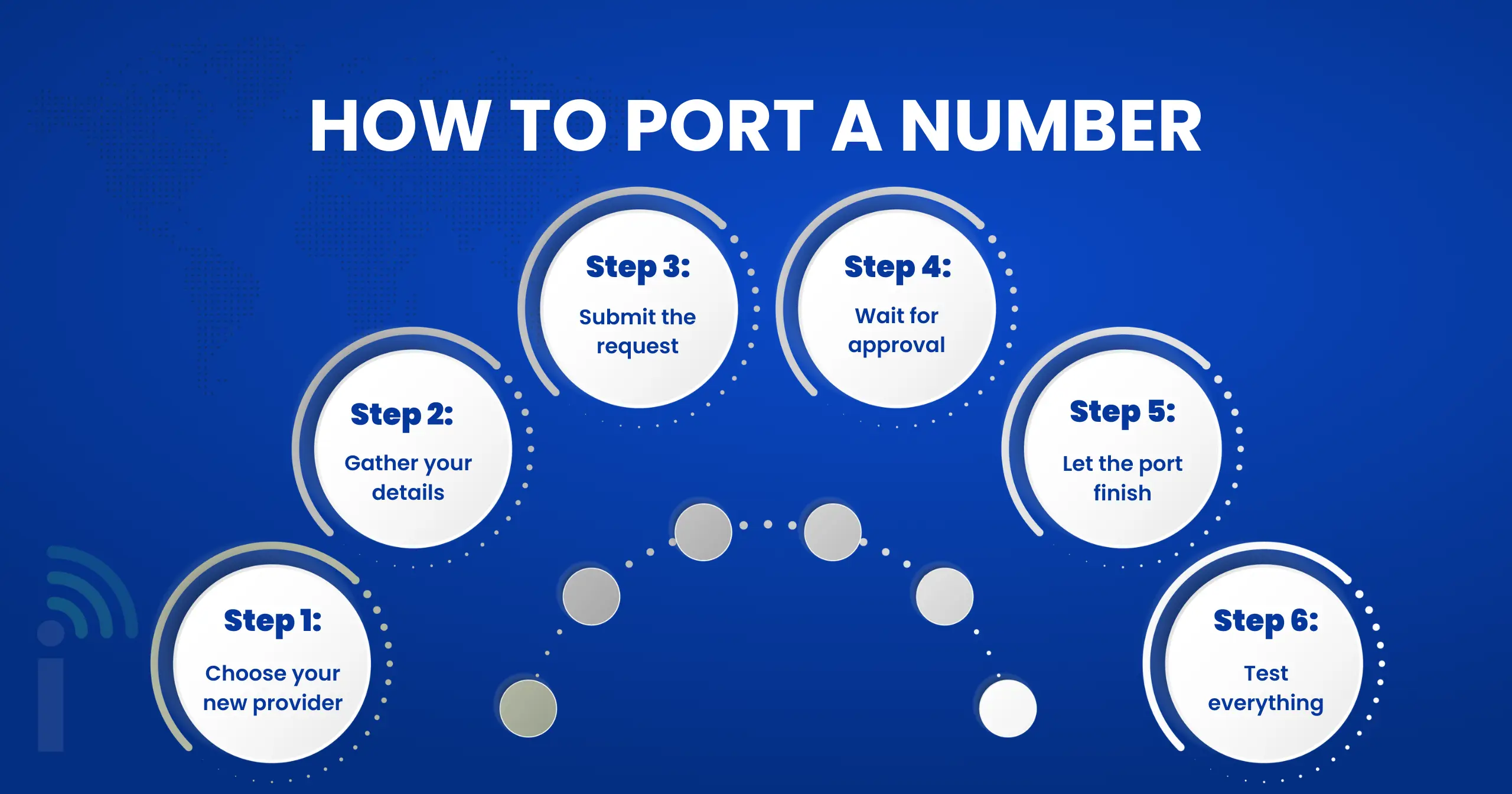
The process is similar almost everywhere. Here’s the short version:
The process is similar almost everywhere. Here’s the short version:
- Choose your new provider: Pick one that fits your needs, and check that it supports porting for your number type and country.
- Gather your details: Collect your account number, the name and address on the account, and the number you want to move, because everything has to match your old provider’s records exactly.
- Submit the request: Give those details to your new provider so they can start the transfer.
- Wait for approval: Your old provider confirms the request with the new one, and an unpaid balance can hold things up.
- Let the port finish: It can take anywhere from a few minutes to several days, depending on the providers and the number.
- Test everything: Make and receive a few calls and texts, and make sure voicemail and settings work the way you expect.
Why Businesses and Individuals Port Number to VoIP
People port number to VoIP for different reasons, but the benefits tend to look alike. Here are the six that come up most:
Lower costs
VoIP plans often cost less than traditional lines, especially for long-distance and international calls.
Call from anywhere
Calls can be answered on a phone app, a laptop or desk phone, which means your team is not limited to one location.
Double down on your number
When you change providers you retain your identity enabling customers to reach you as before.
Additional features
Call forwarding, voicemail, call recording and reports are usually included in the plan and do not require an extra fee.
Easy to grow
Adding a new person or a new line is in minutes not a technician visit.
Less interruptions
Cloud-based service can ensure that your business continues to be available even when it's not in the office.
Port In Phone Number: What You Need to Know
“Port in” simply means bringing a number into a new provider. “Port out” means taking it away from the old one. When you port in phone number requests to a new service, the new provider usually handles the paperwork and talks to your old provider for you, so you don’t have to chase anyone yourself.
What you do need is accurate information. Before you start how to port a number with a new provider, have these ready:
- Your current provider’s name
- The account number on your bill
- The name and billing address on the account, exactly as your old provider has them
- The number, or numbers, you want to move
- Any PIN or recent bill your old provider may ask for
One rule matters more than the rest: don’t cancel your old service until the port is complete. If you cancel too early, you could lose the number for good. Also keep in mind that each number needs its own port request, so a business with several lines should list every one of them.
We'd Love to Hear From You
Ready to expand your business globally?
Fill out the form below, and our team will help you choose the perfect number.
Is It Possible to Get a Free Number Porting Service?
Sometimes, yes. It depends on who you’re leaving, who you’re joining, and the type of number you’re moving.
When Porting Is Free vs When Fees Apply
Many new providers don’t charge anything to bring a number in, and some even offer a free number porting service as a perk for signing up. Fees tend to appear in other places. Your old provider might charge a release or transfer fee, or ask you to pay off a balance or a contract before they let the number go. Rush ports, special number types, and numbers in certain countries can also cost extra. So the honest answer is that moving a basic number is often free or cheap, while complicated cases may not be.
What to Watch for in "Free" Offers
A free number porting service is only free if the total cost is clear before you start. Watch for offers that tie you to a long contract, a high monthly price, or a setup fee tucked into the fine print. Check whether the free offer covers your number type and your country, and ask what happens if the port fails. A good rule is to request the full cost in writing before you submit anything. If the provider can’t tell you, that’s worth noting.
Common Problems During Number Porting
Even when you know how to port a number, things can go sideways. These four problems come up the most:
Mismatched details
A different spelling of your name, an old address, or a wrong account number can get the request rejected, so match your old provider's records exactly.
Unpaid balances or contracts
If you have money to pay, or you still have a contract, your old provider may slow down or block the port until you pay them.
Finalizing accounts too soon
When you close out your old account before the port is completed, you may end up losing the number.
Delays and short gaps
Ports can take from minutes to days, and there may be a brief interruption in service while the number switches over.
Tips for a Smooth Number Port
A little prep makes the whole thing painless. If you’re planning phone number porting for a business, these four tips apply, and they’re good to remember every time you work out how to port a number:
- Keep the old service active: Leave it running until the new provider confirms the port is complete.
- Check your details twice: Compare your request with a recent bill, and fix any mismatch before you submit.
- Choose a quiet time: Time the port over a period of quiet (and let your team and key customers know that there may be a short break).
- Test and tidy up: Make test calls and texts, update your contact details where the number appears, watch your next bill, and cancel unneeded old services only after everything works.
Where Dialinger Fits In
If you’re ready to move, Dialinger is worth a look. It’s a cloud-based communication platform, and its phone number porting page explains how to keep your existing number while changing providers. If you’re still working out how to port a number to a cloud phone system, that page lays out the steps and what to remember before you begin. Planning to port number to VoIP for your business? Dialinger also offers a global virtual phone number, plus call forwarding and mobile and desktop apps. Before you commit, ask how a port in phone number request is handled and how long it takes for your number type. Also ask whether there’s a free number porting service or any fee you should know about. You can start with a free trial to look around, and once you know how to port a number, the hard part is over.
Frequently Asked Questions (FAQs)
What do I need to port my number?
You need the number you want to move, your current provider’s name, and your account number. You also need the name and billing address on the account, exactly as your old provider has them. Some providers also ask for a PIN or a recent bill. Even a small mismatch can get the request rejected, so check everything before you submit.
What is the cheapest way to get a phone number to port?
If you already have the number, pick a new provider that doesn’t charge to bring it in. Also make sure your old provider isn’t adding a release fee or a contract payoff. If you don’t have a number yet, a low-cost prepaid or VoIP plan is usually the cheapest way to get one. Just check that the number type can be moved later.
Can I port an inactive phone number?
Usually not, because most providers need the number to be active on the old account. A disconnected number may be held for a short time and then released to someone else. If yours went inactive recently, call your old provider right away and ask if it can be restored. Rules vary, so don’t count on it.
Can I port my cell number to a landline?
Often, yes, but it depends on your area and the provider you’re moving to. Many people move a cell number to a VoIP or cloud landline, which is usually more flexible than a traditional line. Ask your new provider first, and keep your cell service active until the port finishes. Cancelling early could cost you the number.