Difference Between Inbound vs. Outbound Call Centers
Inbound and Outbound call center anyone who’s worked in customer support or sales has probably heard both terms thrown around, but a lot of people still mix them up. The two sound similar, and they often even share the same office space and staff, but the way they operate is actually pretty different once you look closer.
Understanding this difference matters more than it seems. Whether you’re setting up outreach for your own business or just trying to figure out which kind of role you’re applying for, knowing how each side actually works changes how you’d approach either one.
What Is an Outbound Call Center and an Inbound Call Center?
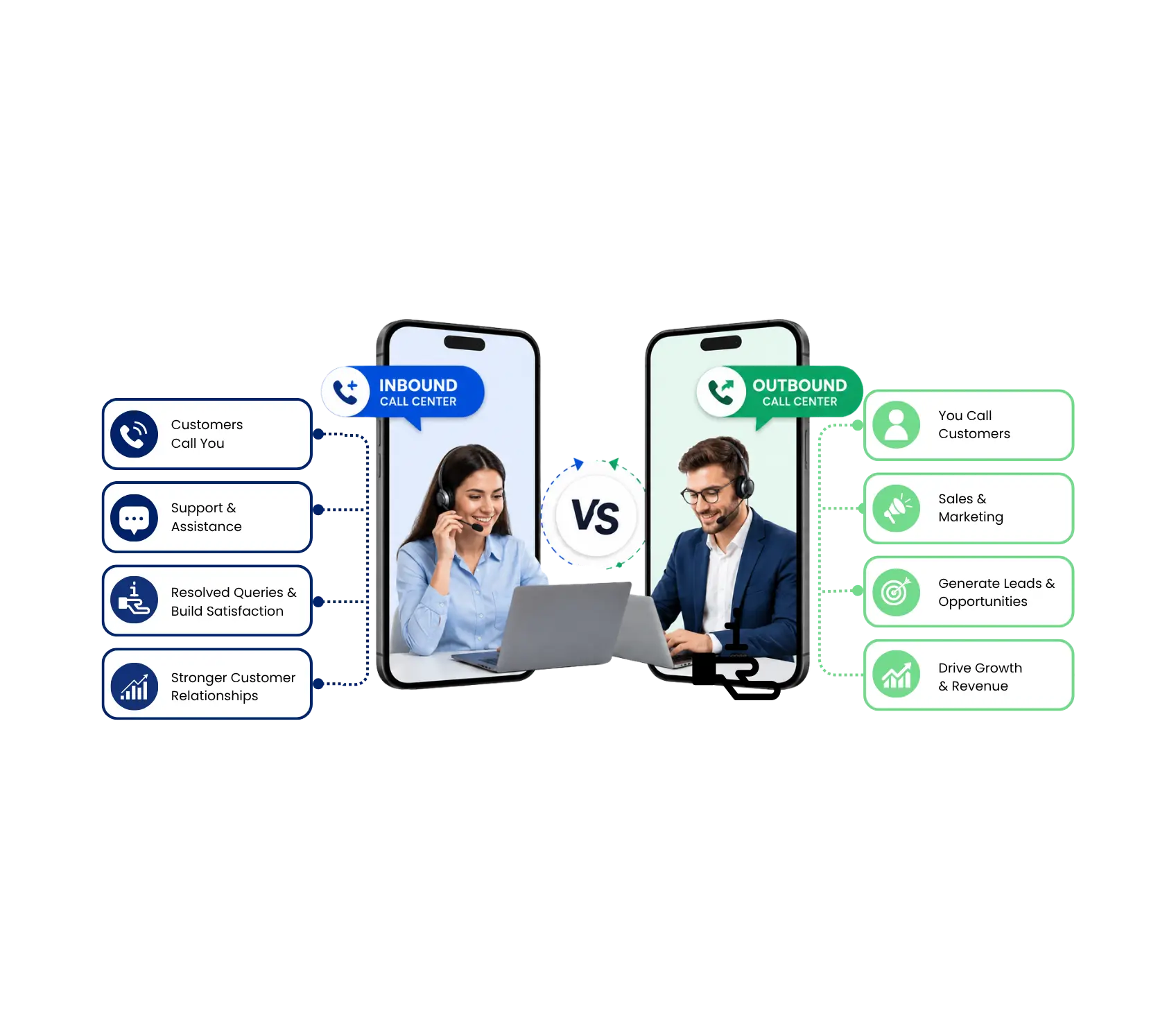
An outbound call center exists to make calls, not just receive them. Agents dial out to leads, customers, or prospects, initiating the conversation instead of waiting for the phone to ring. This usually covers sales calls, appointment reminders, surveys, or debt collection: anything where the business needs to reach out first.
An inbound call center flips that entirely. Customers reach out because they need help, have a question, or want to report a problem, and the team’s whole job is to answer efficiently and solve whatever brought that person to the phone. Support lines, order tracking, and technical help desks almost always run on this model. Some companies run both side by side, using the same staff or platform to handle whichever type of call comes up that day.
Comparing Inbound and Outbound Call Centers
Put side by side, the two setups have pretty distinct goals, even when they’re run by the same company.
An outbound call center is proactive by nature. Success gets measured by things like how many calls convert into sales, how many appointments get booked, or how many surveys get completed. The pressure shifts toward volume and persistence, since not every dialed number leads to a conversation.
Instead, the other side is reactive. Success is often determined by how quickly calls are answered, how quickly problems are fixed, and how satisfied customers are afterward. The pressure here is about responsiveness, since a customer who’s already frustrated doesn’t want to wait on hold.
Neither one is harder or easier than the other; they’re just built around opposite kinds of pressure. One reaches out and persists, the other waits and reacts quickly, and mostgrowing businesses end up needing a mix of both eventually.
How IVR Reduces Inbound Call Center Volume
One of the biggest challenges for any inbound call center is call volume. Even a team with lots of staff can get overwhelmed during a busy period, and that’s where IVR, or interactive voice response, comes in.
IVR systems answer calls and direct callers to what they really want, often before a live agent even picks up. If a caller asks about a simple account balance, an automated answer can be provided instantly, with no human agent involvement at all. The simple ones get filtered out early, but the more complex ones still get routed to the right department. This keeps the queue flowing even at peak hours.This matters because a big chunk of what lands in the queue is repetitive. Password resets, business hours, order status: these don’t need a live person every single time. A good IVR setup handles the predictable stuff automatically, freeing up agents to focus on calls that actually need a human’s judgment, and it keeps wait times manageable even when volume spikes unexpectedly.
Get a Dedicated WhatsApp Number
We'd Love to Hear From You
Ready to expand your business globally?
Fill out the form below, and our team will help you choose the perfect number.
Types of Inbound Calls
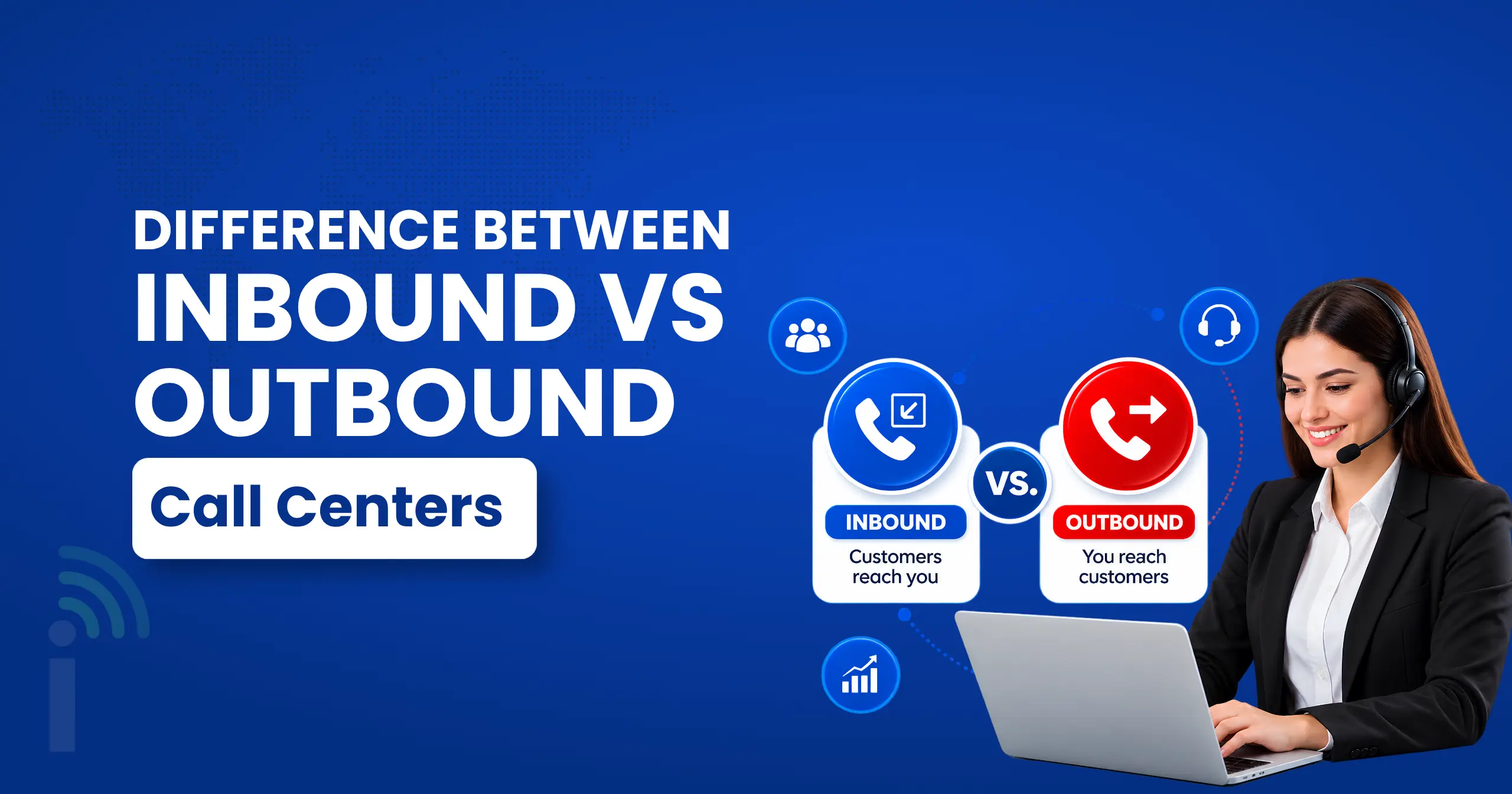
Not every call that comes in is the same, and recognizing the pattern helps with staffing and training. The types of inbound calls include:
- Support requests: When a customer has a problem and wants help solving it.
- General queries: Queries that are related to price, hours, or how something works.
- Current order & accounts status: Verifying an ongoing process.
- Complaints: Dissatisfaction with something and a desire to make it right.
- Renewal & upgrade: When a customer who already has a service wants to change to another service.
These types of inbound calls usually vary by industry, but the pattern tends to repeat: a handful of common reasons show up again and again, and recognizing them early helps route calls faster instead of relying on one long queue for everything.
Types of Outbound Calls
Like inbound calls, there are specific patterns in types of outbound calls which relate to a few business objectives:
- Sales calls: Making a call to a lead or prospect to make a sale.
- Appointment Reminders: To cut down on no-shows by confirming in advance.
- Surveys and feedback calls: Soliciting feedback after a purchase or service.
- Collection calls: Chasing up overdue debt.
- Renewal calls & retention calls: Contacting before subscription expiration.
These categories usually determine how a team is trained, since sales-heavy calls need a very different skill set than reminder or survey calls, where persistence and tone matter more than closing a deal on the spot. Training a team to handle outbound calls well usually starts with knowing which of these categories they’ll be running most often, and building a workflow around it.
Advantages of Both Call Centers
An outbound call center drives growth. It puts a business in front of potential customers rather than waiting for them to show up, and it lets a company stay proactive about things like renewals or reminders instead of losing revenue passively. Here’s how each side actually pays off:
Higher conversion than passive marketing
A live conversation tends to close more deals than an email or ad ever could.
Faster growth from direct outreach
Reaching out to leads directly means a business isn't just waiting around for people to find it.
More consistent revenue
Proactive renewal and reminder calls keep customers from lapsing or cancelling altogether.
Better visibility into problems
patterns in complaints or questions often point straight to what needs fixing in a product or service.
Together, the two cover both sides of customer relationships, creating new opportunities on one end and solving problems on the other, which is exactly why so many companies eventually run both under one roof.
Examples of Both Call Centers
A real estate agency cold-calling leads from an open house sign-up sheet is a straightforward outbound call center example, relying on outbound calls to turn interest into an actual sale. So is a gym reaching out to members whose memberships are about to expire, trying to get them to renew before they cancel entirely, or a clinic making outbound calls to confirm appointments before a busy week. Teams running this kind of volume usually lean on something like Dialinger’s auto dialer system to move through lead lists faster, with call analytics showing which calls are actually converting.
On the flip side, a telecom support line is a classic example of the reactive side, handling billing questions, service outages, and technical troubleshooting all day. A hospital’s patient help desk works the same way, fielding appointment questions and insurance concerns as they come in, since inbound calls there rarely follow a predictable schedule. A setup like this runs smoother with something like Dialinger’s phone IVR, which routes simple questions automatically and only passes complex ones to a live agent.
Dialinger: The Best Call Center Solution for You
Whether you’re building out sales outreach, support, or running both at once, the platform behind it matters as much as the team. For outbound-heavy teams, Dialinger’s auto-dialer system speeds through lead lists without manual dialing, and its call analytics feature shows exactly how each campaign is performing.
Everything runs through Dialinger’sphone system, built to support both sides of the business from a single dashboard. If you’d like to see it in action, you can book a demo and walk through the setup before making any decision.
At the end of the day, an outbound call center and its inbound counterpart aren’t really competing ideas. One brings customers to you, the other handles what customers bring to you, and most growing businesses eventually need both working well together.
Frequently Asked Questions (FAQs)
What's actually different between an outbound call center and an inbound call center?
It really just comes down to who starts the call. An outbound call center reaches out to you, while an inbound call center waits for you to reach out to them.
Do agents need totally different skills for outbound vs inbound work?
Kind of, yeah. Outbound is more about persistence and closing; inbound is more about patience and fixing things.
Can one business actually run both inbound and outbound call center at the same time?
Sure, tons do. Same team, same tools even, just switching hats depending on the call.
Are outbound calls basically just spam calls?
Not really. A reminder about your appointment or a quick survey call still counts as outbound, not just sales pitches.