VoIP for Healthcare: Secure & Reliable Communication for Modern Healthcare
If you’ve ever called a clinic and sat on hold listening to the same eight seconds of elevator music on repeat, you already understand the problem this article is about. Healthcare runs on phone calls: appointment bookings, prescription refills, lab result queries, insurance verification, worried family members checking on a patient at 2 a.m. And yet, an enormous number of practices are still running that entire workload through phone hardware that hasn’t been updated since a flip phone was considered cutting-edge.
That’s where VoIP for healthcare comes in. It’s not a buzzword; it’s a genuinely different way of handling every call that touches your practice, and it’s becoming the standard rather than the exception. In this article, we’ll walk through what it actually means, why compliance matters more here than in almost any other industry, and what to look for before you switch.
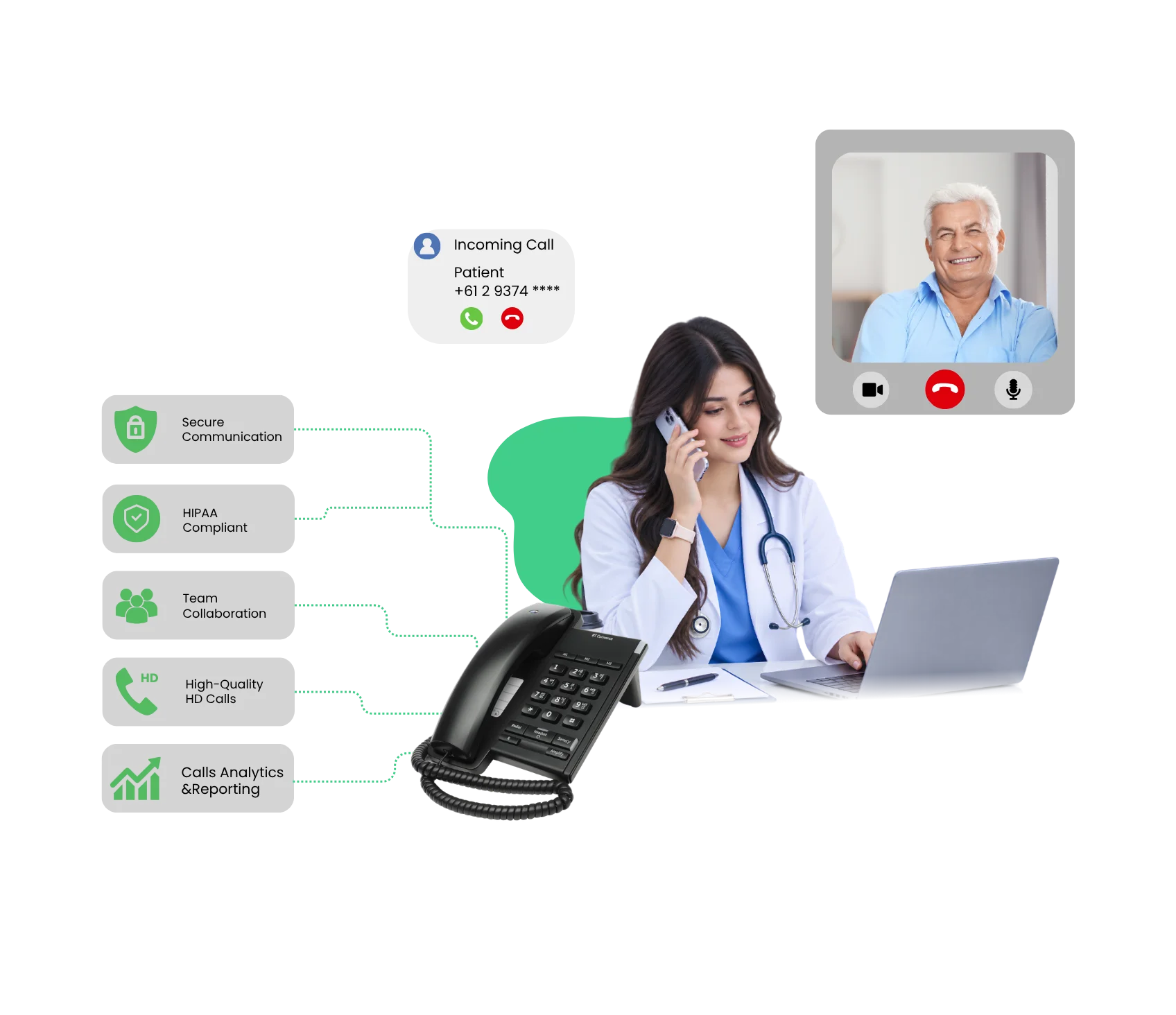
What Is VoIP for Healthcare, Really?
VoIP for healthcare means routing your clinic or hospital’s calls over the internet instead of traditional copper phone lines. Instead of a bulky PBX box sitting in a back closet, your calls move through software: accessible from a desk phone, a laptop, or a mobile app, depending on how your staff prefers to work.
But describing VoIP for healthcare purely as “internet calling” undersells it. In a medical setting, a phone system also has to handle patient privacy, call documentation, after-hours triage, multi-location routing, and integration with scheduling or EHR tools. So when people search for VoIP for healthcare, they’re usually not just asking “can I make calls online”, they’re asking whether a system exists that can replace an outdated PBX without creating compliance headaches or confusing their front desk staff.
The Everyday Problems a Legacy Hospital Phone System Creates
Ask any office manager at a busy practice what frustrates them most, and a few answers come up again and again:
- Calls get dropped mid-transfer because the old hospital phone system wasn’t built for multiple departments routing calls back and forth.
- There’s no record of who called, when, or what was discussed, which becomes a real problem during an audit or a dispute.
- Remote or multi-location staff can’t answer the main line from anywhere but the front desk.
- After-hours calls go straight to voicemail, and patients hang up before leaving a message.
- Scaling up (a new location, a seasonal surge, a new specialist) means calling the phone company and waiting weeks for new lines.
None of these are minor annoyances. In healthcare, a missed call can mean a missed appointment, a delayed prescription, or a patient who simply gives up and goes elsewhere. A modern hospital phone system needs to behave less like old telecom infrastructure and more like software that adapts to how care actually gets delivered.
HIPAA Compliant VoIP: The Part You Cannot Skip
This is the section that actually separates a usable system from a liability. Any conversation involving patient names, symptoms, appointment details, or billing information touches protected health information, which means the phone system carrying that conversation needs to be built around real privacy protections.
A HIPAA compliant VoIP platform typically includes:
- Encrypted call transmission, so conversations can’t be intercepted in transit.
- Signed Business Associate Agreements (BAAs) with the provider, which ensure shared responsibility for protecting patient data.
- Access controls and audit logs that allow you to track who accessed a call recording or voicemail and when it occurred.
- Secure storage along with clearly defined retention or deletion policies for call recordings and voicemails.
Here’s the uncomfortable truth: a lot of consumer-grade VoIP apps are not HIPAA compliant VoIP solutions, even if their marketing pages hint otherwise. If a provider won’t sign a BAA, that’s a dealbreaker, full stop. Before you commit to any platform, get this in writing rather than taking a sales rep’s word for it.
Choosing HIPAA compliant VoIP isn’t just about avoiding fines, it’s about protecting the trust patients place in your practice every time they pick up the phone.
What to Look for in VoIP Phone Systems for Healthcare?
Not every VoIP provider understands medical workflows, so it helps to know what actually separates a general-purpose business phone tool from VoIP phone systems for healthcare built with clinics in mind.
Smart call routing
Front desk, billing, pharmacy, and nursing stations all need different call paths, and a good system lets you build that logic without an IT ticket.
Call recording
It is beneficial to record calls for training purposes and dispute resolution; however, healthcare organizations must also manage the duration for which these recordings are retained and the individuals who have access to them.
We'd Love to Hear From You
Ready to expand your business globally?
Fill out the form below, and our team will help you choose the perfect number.
Flexibility for Mobile and Desktop
It is essential that doctors on rounds, administrators working from home, and receptionists at the front desk can all be reached at the same phone number, regardless of their location.
Voicemail to text and missed call alerts
In a clinical setting, a missed call shouldn’t go unnoticed for hours.
Scalability
Opening a second location or adding seasonal staff shouldn't require new hardware or a multi-week install.
When you’re comparing VoIP phone systems for healthcare, ask providers directly how their platform handles these five points, because generic answers usually mean generic features.
Health Care Cloud Telephone System: What Changes Once You Move to the Cloud?
Once a practice moves away from on-premises hardware, the shift to a health care cloud telephone system tends to change daily operations in ways that aren’t obvious until you’ve lived with it for a few weeks.
Updates happen automatically instead of requiring a technician visit. New employees can be set up with an extension in minutes instead of days. If the power goes out or a hurricane closes the building, calls can be rerouted to mobile phones instantly, so patients aren’t left calling a dead line during an emergency. Reporting dashboards show call volume by time of day, which helps front-desk teams staff appropriately during your busiest hours instead of guessing.
A health care cloud telephone system also tends to be dramatically cheaper over time. There’s no maintenance contract for aging hardware, no per-line installation fee for every new phone, and no time to time upgrade required every few years just to keep the system running.
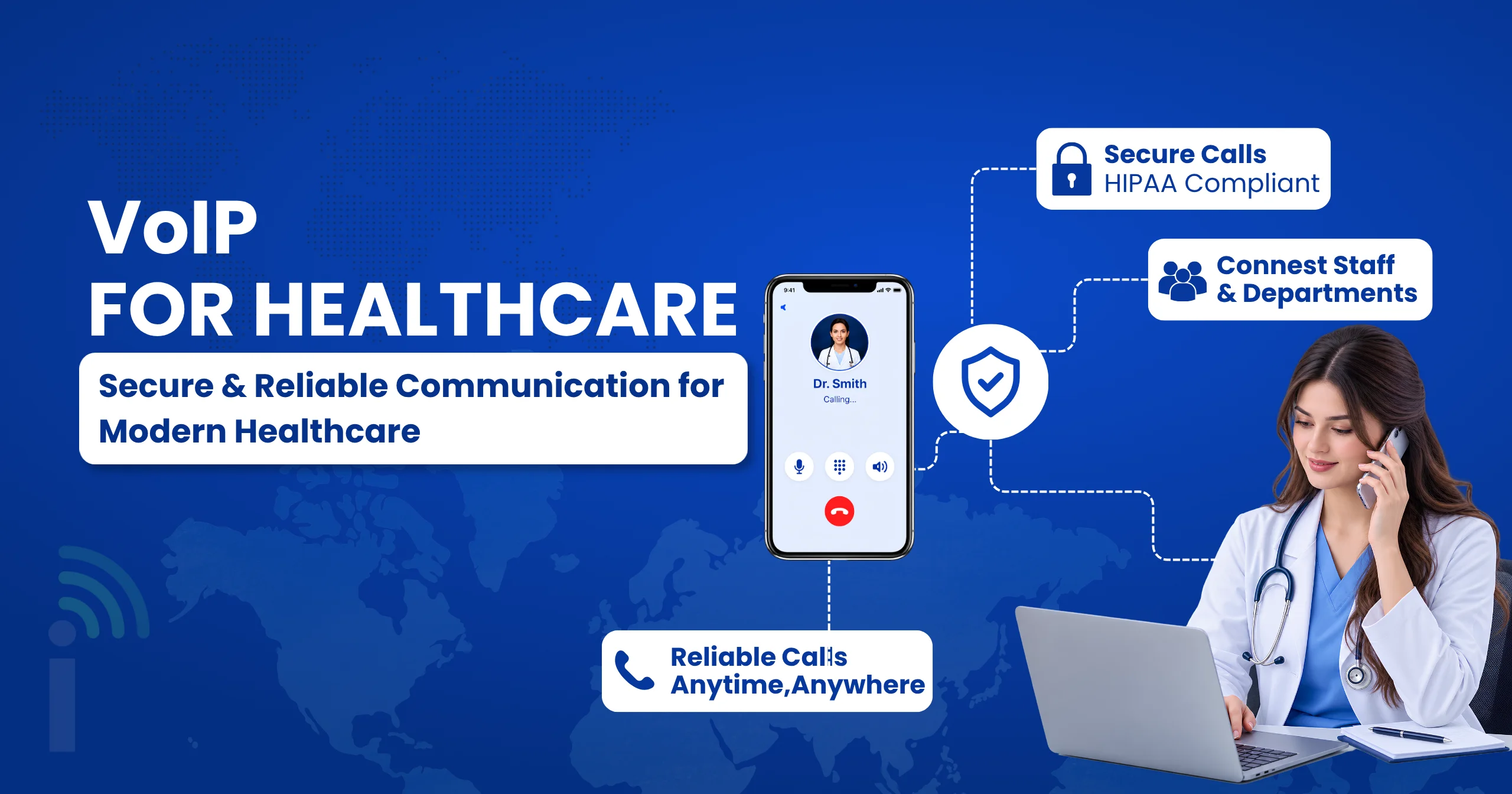
Medical Virtual Receptionist Covering the Gaps Your Staff Can't
Even the best front desk team can’t answer three lines at once during a morning rush hour. This is where a medical virtual receptionist earns its place in a modern healthcare phone setup.
A medical virtual receptionist can greet callers and route them to the appropriate department. They can also collect basic information before transferring the call live and manage after-hours inquiries by offering options such as scheduling a callback or connecting with an on-call provider for urgent matters. It doesn’t replace your human staff, it protects their time and makes sure no call falls through the cracks while they’re on another line or dealing with a patient in person.
For smaller practices, a medical virtual receptionist can effectively function as a 24/7 front desk without the cost of hiring around-the-clock staff. For larger hospital networks, it becomes the first layer of a much larger call routing structure, quietly making sure urgent calls get flagged and routine ones get handled without tying up a nurse’s line.
The Real Benefits, Beyond the Feature List
Remove the technical language, and the case for VoIP for healthcare comes down to a few practical outcomes:
- Fewer missed calls, which directly means fewer missed appointments and lost revenue.
- Better documentation for compliance, disputes, and training.
- Staff who can work from anywhere, and patients will never know the difference in call quality.
- A phone system that will grow with your practice rather than needing to be replaced every few years.
- Lower long-term costs compared to maintaining aging hardware.
These aren’t hypothetical benefits. They’re the reason so many independent clinics, multi-location practices, and hospital networks have quietly made the switch over the past few years, often after one too many dropped calls during a busy season.
How to Choose the Right Provider
Before signing anything or choosing better VoIP for healthcare, it’s worth running through a short checklist:
- Will they sign a BAA, confirming genuine HIPAA compliant VoIP practices?
- Can the system handle department-based routing without custom development?
- Does it include a medical virtual receptionist option for after-hours and overflow calls?
- Is call quality reliable on both mobile and desktop apps?
- What does onboarding actually look like, days or weeks?
- Are pricing tiers transparent, with no hidden fees?
Where Dialinger Fits Into This?
If you’re evaluating VoIP for healthcare and want a system built around exactly the needs outlined above: smart routing, mobile flexibility, and a setup that doesn’t take weeks to launch, it’s worth taking a look at Dialinger healthcare phone solution. It’s built for clinics, practices, and multi-location healthcare teams who need reliable call handling without the hassle of hardware.
Dialinger also offers a dedicated virtual receptionist feature that can cover overflow and after-hours calls, along with call recording for documentation and training purposes. If you’d rather see it in action than read about it, you can book a demo and walk through exactly how it would work for your practice before making any commitment.
Switching phone systems always feels like a bigger project than it turns out to be. Most practices that make the move say the same thing afterward, they wish they’d done it sooner.
Frequently Asked Questions (FAQs)
What is VoIP for Healthcare?
It means your clinic’s calls run over the internet instead of old copper lines or any hardware, so you get smarter routing and way less hassle than a traditional setup.
Can a small clinic even afford to switch to VoIP phone systems for healthcare?
Yes, Most voip phone systems for healthcare let you keep your old number and get set up in a couple of days, no fresh wiring or hardware set-up needed.
Is VoIP for Healthcare HIPAA compliant?
Yes, as long as the provider offers hippa compliant voip with a signed BAA, encrypted calls, and access logs to protect patient data
What happens to calls after the clinic closes for the day?
That’s where a health care cloud telephone system paired with a medical virtual receptionist comes in handy. It picks up after hours so nobody’s call just rings out.