Getting an OTP Number You Can Actually Rely On
OTP number? Think about the last time you logged into your bank app from a new phone, or signed up for something and had to punch in a code that popped up on your screen. Odds are you used an OTP and didn’t even register it as a “security step” it just felt like part of the process. That one OTP code, valid for a couple of minutes at most, quietly does more work than most people ever notice. But that little six-digit code is doing more heavy lifting than most people give it credit for. It’s often the only thing standing between your account and someone who’s guessed your password.
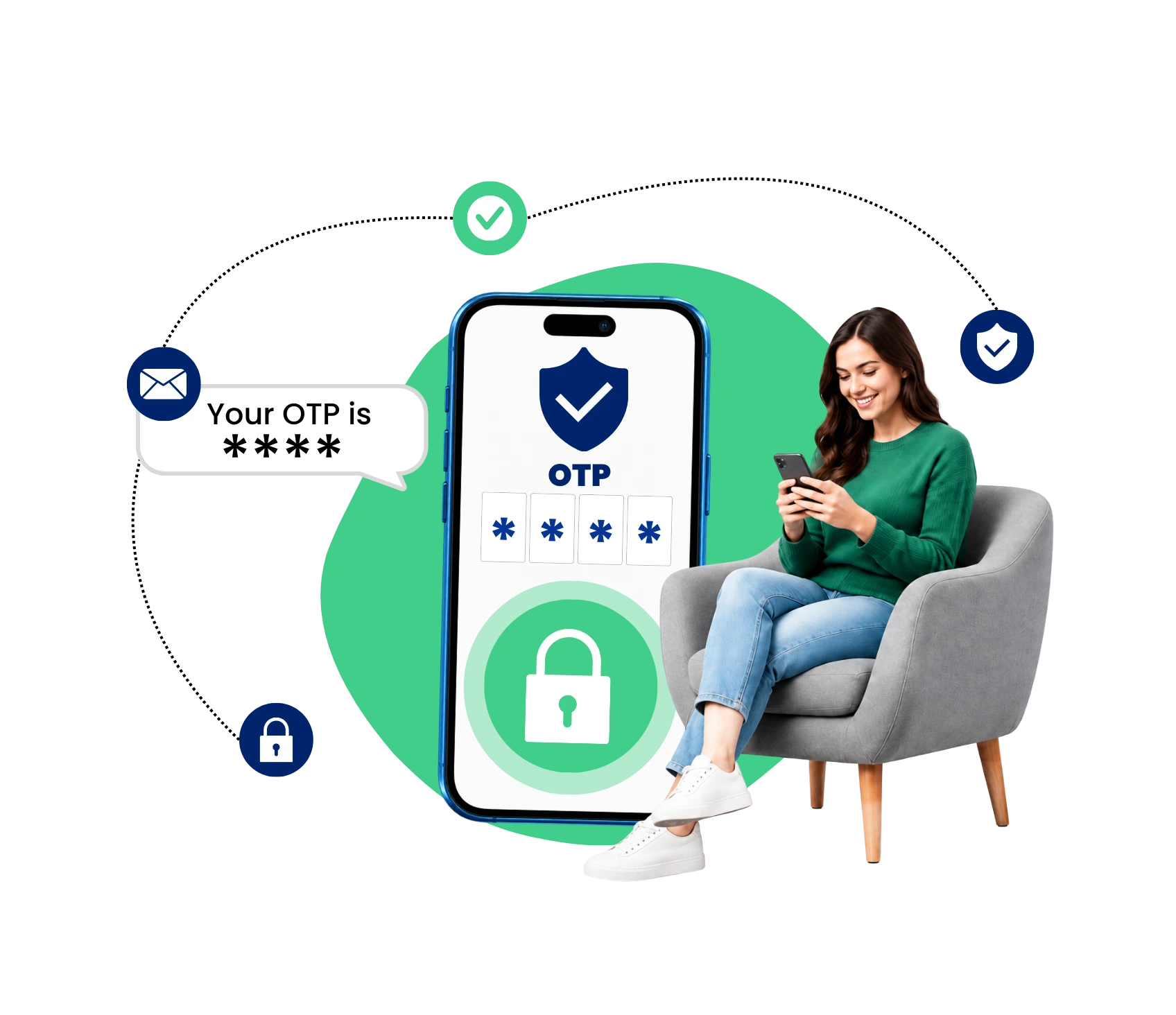
What's an OTP Number, Really?
OTP stands for one-time password, and an OTP number is exactly what it sounds like: a code that’s generated for a single use and then it’s done. It’s not something you memorize or reuse like a regular password it expires after a few minutes, which is precisely why it’s so much harder to exploit even if someone manages to see it.
You’ve probably bumped into this in situations like:
- Logging into a banking app from a device you haven’t used before
- Verifying your phone number when you sign up for something new
- Confirming an online payment before it goes through
- Resetting a password you forgot (again)
How an OTP Number Actually Gets to You
The mechanics are pretty straightforward, even if they happen in the background without you noticing:
Step 1
You try to log in, sign up, or complete a transaction, and the system decides it needs to verify it's really you.
Step 2
A random, time-limited code gets generated on the server
Step 3
That code is sent to your phone or email, usually as a text or an automated call.
Step 4
You type it back into the app or site before the timer runs out.
Step 5
The system checks it against what it generated.
Step 6
If it matches and it's still within the time window you're in.
Because each code only works once and burns out fast, intercepting it doesn’t do an attacker much good. By the time they’d use it, it’s already worthless.
Setting Up an OTP Number System That Doesn't Fail
If you’re building this out for a business or just want something more dependable for your own logins, here’s roughly how it plays out in practice:
1→
Choose a Provider
Pick a VoIP provider that supports both SMS and voice-based verification, so you’re not stuck with one delivery method.
2→
Set Up a Dedicated Verification Number
Set up a dedicated number just for verification traffic, separate from any general business line.
3→
Connect the API
Plug the provider’s API into your signup or login flow so codes go out automatically.
4→
Enable Voice Fallback
Turn on voice fallback for the moments SMS gets delayed or silently blocked.
5→
Test Region by Region
Test delivery in every region your users actually log in from, reliability varies a lot by provider and geography.
6→
Monitor Delivery and Failure Logs
Keep an eye on delivery and failure logs so you catch recurring problems before they cost you signups.
Do this right and you end up with an OTP number system that isn’t hanging all its weight on one delivery method which is exactly where SMS-only setups tend to fall apart.
Why Regular SMS Drops the Ball So Often
This is the part that frustrates people and businesses alike. Standard mobile networks just weren’t designed to handle the sheer volume of verification traffic they’re now expected to carry, and it shows in some pretty predictable ways:
- Carrier congestion: When message volume spikes, routes back up and codes that should take seconds can take minutes.
- Cross-border headaches:A code sent internationally often gets stuck bouncing between carriers, especially in places with older telecom infrastructure.
- Spam filters:Some carriers automatically flag verification texts as spam and quietly block them before they ever reach you.
- Scaling problems: SMS gateways tend to buckle under sudden spikes, which is, ironically, exactly when reliable delivery matters most.
If you’re a business sending out thousands of these codes a day, every failed OTP number delivery is a signup that didn’t finish or a transaction that got abandoned halfway through.
Where VoIP Actually
Helps
This is the part where switching things up starts to pay off. VoIP-based delivery doesn’t rely solely on the same congested SMS routes that traditional carriers depend on, and the difference in reliability is noticeable:
- It scales better: VoIP infrastructure is built to absorb high call and message volume without choking the way old-school carrier networks do.
- International delivery is smoother: Routes go through optimized global networks instead of getting passed between mismatched carrier systems.
- You get a voice backup: If a text-based OTP number never shows up, a VoIP system can just call the person and read the code out loud, something a text-only setup can’t do.
- It’s usually cheaper at scale:Sending verification traffic through VoIP tends to cost less per message than relying purely on traditional SMS gateways.
Picking a Provider Worth Trusting
Not all VoIP providers handle this the same way, so it’s worth being a little picky. Look for solid global carrier relationships, the option to fall back to voice calls, and delivery analytics that actually tell you something when an OTP number doesn’t arrive.
This is more or less the gap Dialinger messaging and VoIP tools are built to fill. Instead of betting everything on a single SMS route that can jam up during busy periods, Dialinger lets you send an OTP number by text or by an automated voice call, with global carrier coverage built specifically for verification traffic rather than tacked on as an afterthought. For any business that can’t afford a lost signup or an abandoned login because a code showed up too late, that kind of backup isn’t a nice-to-have, it’s the difference between a smooth experience and a customer who just gives up.
Frequently Asked Questions (FAQs)
What actually is an OTP number?
It’s the number your one-time code gets sent through, basically the delivery system behind that quick verification text.
Can an OTP number work well for users outside the country?
It can, but only if the provider actually handles international routing properly, not every one does.
Is voice-based OTP delivery actually reliable?
Yeah, honestly it’s a solid backup, especially when texts get delayed or blocked for whatever reason.
Why does my OTP code sometimes just never show up?
Usually it’s the carrier network getting overloaded or the message getting flagged somewhere along the way, it happens more than people realize.