Remote Workforce: Collaborate Without Boundaries
A few years ago, hiring someone mostly meant finding a person who could get to your office every morning. That isn’t the case anymore because of the Remote Workforce. A designer in Lisbon, a developer in Nairobi, and a manager in Toronto can work on the same project and never share a room. Pretty wild when you think about it.
Of course, it isn’t all smooth. How do you keep people connected when nobody runs into each other in the kitchen? How do you build trust with someone you’ve never met in person? Let’s walk through it in plain words, so you can feel good about running a team that’s spread out.

What Is a Remote Workforce?
A remote workforce is simply a group of people who do their jobs without going to a central office. Some work from their living rooms. Some rent a desk at a coworking space. Others live in a different city, or even a different country. They might be full-time employees, part-timers, or freelancers, but they all have one thing in common: their work doesn’t depend on a company building.
The idea isn’t brand new. What changed is the tech. Faster internet and cloud tools made it easy, and plenty of people started asking why they ever needed to commute in the first place. Now you’ll find this setup everywhere, from tiny startups to huge global brands. Where people sit matters a lot less than how they work together and what they get done.
How Does a Remote Workforce Work?
It comes down to trust, a few clear habits, and the right tools. That’s how things typically go.
1→
Digital replaces the office
Cloud storage, project boards and video calls provide everyone with one place to get things done.
2→
The results are what is important
Managers are interested in what’s done, not how long a person spends online.
3→
Some schedules flex a bit
For some teams, people choose their own hours, provided deadlines are met and major meetings are attended.
4→
Tasks are centralized
If all can see what is being done, there is no confusion and there will be fewer repetitive tasks.
5→
Hallway conversations are eliminated
Messages, phone calls, and e-mail are the order of the day, and good, effective communication between the remote workers keeps everyone in the loop.
6→
Check-ins keep people close
A weekly meeting or a quick one-on-one helps people feel noticed, even from far away.
Benefits of Building a Remote Workforce
When you build a remote workforce, the upsides show up faster than most people expect. They touch everything from hiring to everyday focus. These are the big ones.
Bigger talent pool
You can hire the best person for the role, not just the best one within driving distance.
Lower costs
Less office space and fewer utility bills add up to real savings over a year.
Happier people
Flexibility makes it easier to balance work and life, and that usually means people stay longer.
Better focus
A lot of folks get more done at home, where there are fewer random interruptions.
Remote Workforce Management: Strategies for Managing Distributed Teams
Good remote workforce management isn’t about watching people. It’s about backing them up. When leaders give clear direction and then step aside, people tend to do better work. A few things help a lot here.
- Set clear goals: Everyone should know what success looks like and when it’s due.
- Trust your people: Skip the constant monitoring. Judge the work, not the time someone spends online.
- Keep your tools simple: Pick a few reliable ones for tasks, files, and chat. Too many apps just creates noise.
- Give feedback often: Short and honest beats long and rare. Small problems get fixed before they grow.
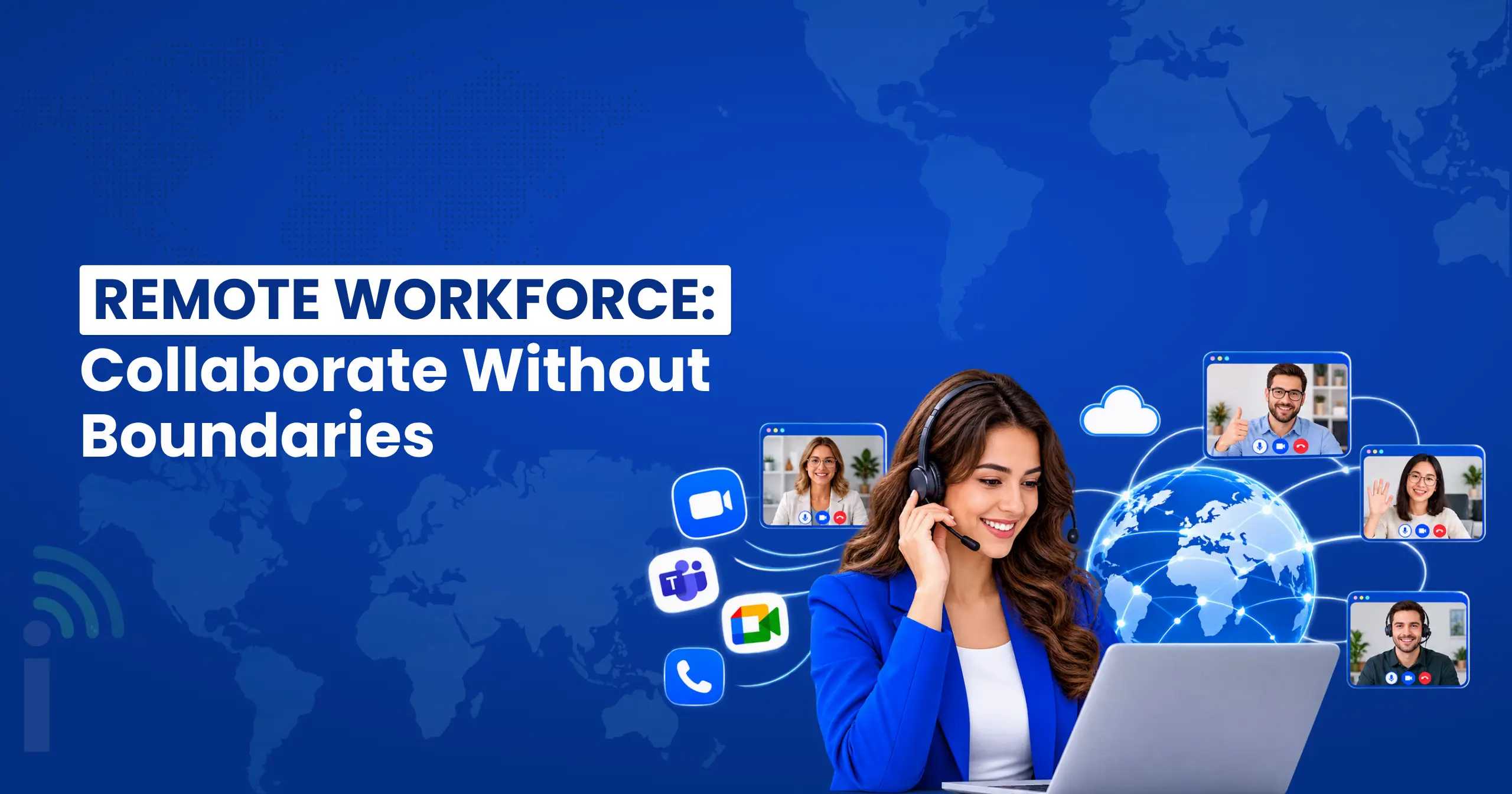
Remote Team Communication: Keep Employees Connected
In an office, conversation happens on its own. You run into someone at the coffee machine and a problem gets solved in two minutes. When people are far apart, that doesn’t happen unless you make room for it. Good remote team communication is mostly about being clear, being kind, and showing up the same way every week. It also helps to pick the right channel for each message, so nobody drowns in notifications. When people know where to find answers and how to reach each other, work moves faster and stress goes down.
Some easy ways to keep in touch with everyone.
- Use the right channel: Chat is best for quick questions, email is best for formal updates and video is best for a difficult or sensitive conversation.
- Write it clearly:It was written down. First, make the point, and be brief. Your teammates will be happy.
- Communicate on a consistent schedule: This weekly team meeting provides a place for everyone to make updates and ask questions.
- Set aside time for informal communication:A silly chat room or “virtual coffee break” makes it easier for people to connect beyond work.
Common Challenges of Managing a Remote Workforce
No setup is perfect. Even with solid remote workforce management, a few problems tend to pop up. The good news is that each one has a fix.
Loneliness
Some people don’t like the daily hustle and bustle of an office. Regular check-ins and friendly team chats may alleviate that.
Time zone differences
Difficult to find any overlapping hours between regions. Change meeting times and use written information.
Home distractions
At home, they can be worn down by distractions from kids, noise and laundry. It helps to have a designated area and flexible work hours.
Fuzzy lines
With home being the office, it's easy to overwork. Encourage your team to take genuine breaks and to log off.
How to Build an Effective Remote Workforce
Start by hiring people who are self-driven and good at writing, because those two traits matter a lot when nobody’s looking over their shoulder. Then set clear goals and choose a small set of tools that everyone actually understands. Put simple remote workforce management habits in place, like weekly check-ins, fair feedback, and open access to information. Make remote team communication a priority from day one, so new hires feel welcome and in the loop right away. And keep listening. Ask your team what’s working and what isn’t, then adjust. A remote workforce that feels trusted, supported, and connected can do great work from anywhere in the world.
Stay Connected with Dialinger
When your team is spread out, every call counts. Dialinger helps businesses make more calls that actually connect, so your people can spend less time dialing and more time talking to real customers and teammates. Take a look at the Dialinger website to see how it could fit the way your team works.
Frequently Asked Questions (FAQs)
What is a remote workforce?
A remote workforce is a group of employees who work outside a central office, like from home, a coworking space, or another city. They can be full-time staff, part-timers, or freelancers. What matters is the work they do, not where they sit.
How do you manage a remote workforce effectively?
Set clear goals, trust your people, and keep your tools simple. Regular feedback and short check-ins also help, so small issues get fixed before they grow.
How can you improve communication in a remote team?
Choose the right channel for each message and keep your writing short and clear. A weekly team call and a casual chat space also help people stay connected.
What are the biggest challenges of a remote workforce?
The most common ones are loneliness, time zone gaps, home distractions, and blurry work-life boundaries. Regular check-ins, flexible schedules, and clear expectations can fix most of them.