Best Conference Call Service for Team: What to Know Before You Choose One
If you’ve ever sat through a call where half the team couldn’t hear, someone got dropped twice, and the screen share never actually loaded, you already know why picking the right tool matters. Finding the Best conference call service for team use isn’t about chasing the flashiest features on a pricing page. It’s about picking something that just works, every single time, so meetings feel normal instead of stressful.
This solution walks through what this kind of tool actually is, who needs one, the different types out there, how international calling fits in, and how to land on the Best conference call service for team that fits how your people actually work, without paying for features nobody touches.
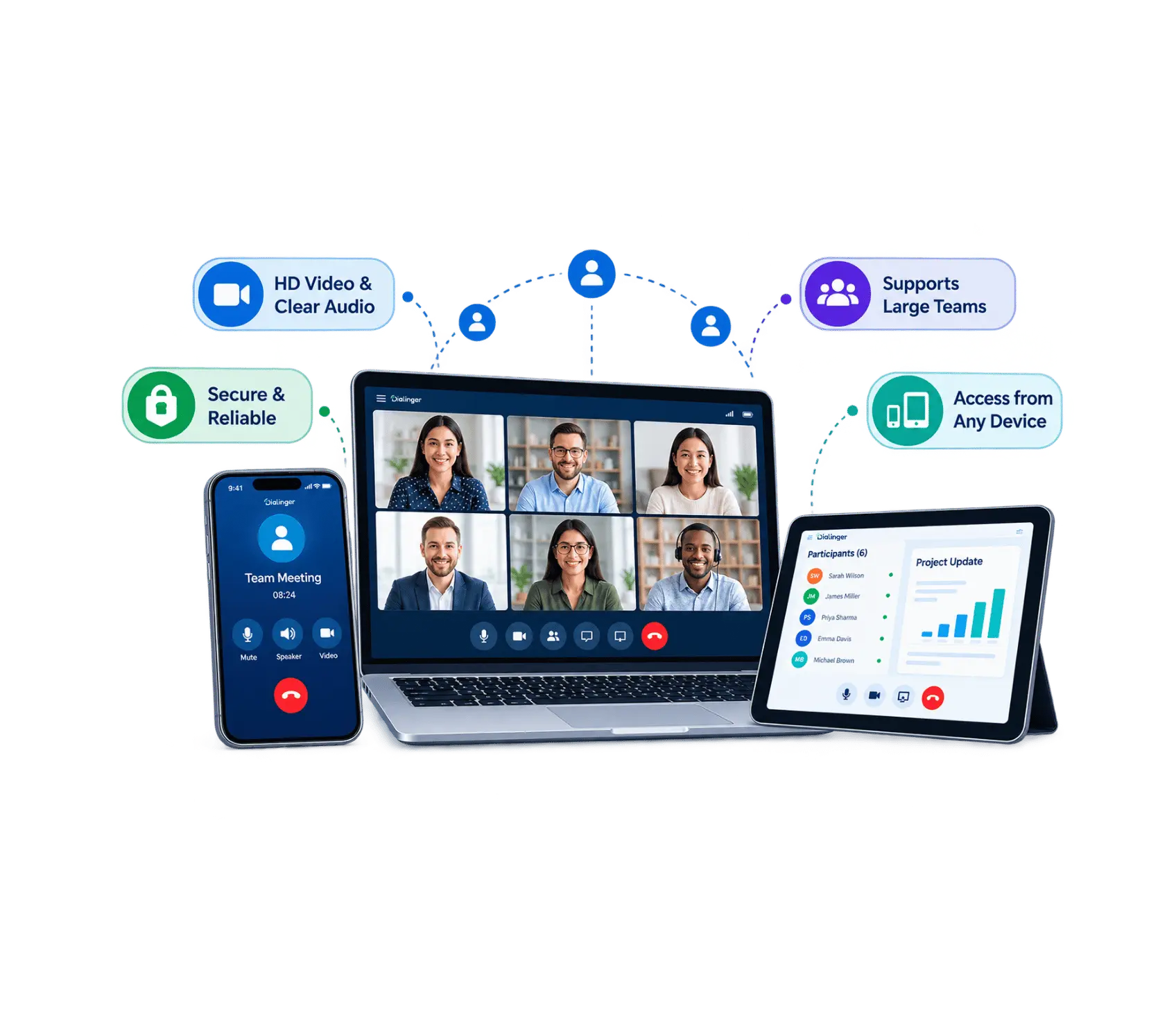
What Is Conference Call Service?
It’s a tool that lets three or more people join the same call at once, usually over the internet or a phone line, sometimes both at the same time. Instead of calling one person, then that person relaying the message to someone else, everyone joins the same line and talks together, in real time, exactly like being in the same room.
Most modern versions do a lot more than just connect voices. Screen sharing, recording, dial-in numbers for people without great internet, and simple scheduling links are all pretty standard now. That combination, reliability plus a few genuinely useful extras, is what separates a basic phone bridge from the Best conference call service for team collaboration today. A tool that only handles audio well but falls apart the moment someone tries to share a screen isn’t really doing its job anymore.
Types of Conference Call
There isn’t just one style of group calling, and knowing the difference helps a lot when comparing options.
Audio Conferencing
The classic dial-in setup, no video, just voices, often used when bandwidth is limited or video simply isn’t necessary for the conversation.
Video Conferencing
Adds visuals of people talking on top of the audio, good for anything where body language or screen sharing actually adds value.
Web Conferencing
Focused on joining via a web browser, screen sharing, and presentation capabilities, common in webinars and training sessions.
Toll-free call-in options
Allows attendees to call in without incurring long distance charges (important for larger groups or outside guests)..
Plenty of providers blend all of these into one platform, so you’re not stuck picking just one style for every kind of meeting your team runs.
How Does International Conference Calling Work?
International conference calling works basically the same way as a regular call, except participants are dialing in or joining from different countries. Behind the scenes, the provider routes each connection through local access numbers or the internet, so someone joining from London and someone joining from Mumbai both land on the same line without either of them paying international long-distance rates.
Most providers offer local dial-in numbers for dozens of countries specifically for this reason. Instead of everyone calling a single number based in one country, participants dial a number local to them, and the system connects everyone together behind the scenes automatically. Especially when working in a distributed company or office that has clients in other areas of the country; nobody wants to receive a surprise bill when arriving at a meeting that they were invited to attend.
We'd Love to Hear From You
Ready to expand your business globally?
Fill out the form below, and our team will help you choose the perfect number.
Who Actually Needs This Service?
Not every business runs the same way, but a surprising number of teams end up needing this at some point, often sooner than they expect.
- Remote and hybrid teams: When people aren’t in the same room, calls are how work actually gets discussed and decided.
- Sales teams: Pitching to prospects, running demos, and looping in decision-makers all happen over calls, often on short notice.
- Customer support teams: It’s often faster to troubleshoot an issue with a customer over the phone than to do a long back-and-forth email thread.
- Multi-location businesses: Different offices need a shared way to sync up without flying anyone anywhere just for a meeting.
- Freelancers and consultants: Client check-ins and project updates usually happen over a quick call rather than a formal meeting room.
- HR and leadership: Company updates, interviews, and one-on-ones all benefit from a reliable, private line that doesn’t drop halfway through.
Basically, if more than two people ever need to talk at once about something that matters, this kind of tool earns its keep pretty quickly, and usually pays for itself in saved time alone. That’s exactly the kind of value the Best conference call service for team use is supposed to deliver, whether your team has five people or five hundred spread across different offices.
Teleconferencing Service By Dialinger
Explore the teleconferencing service provided by Dialinger. Learn Why Distance Stopped Being an Excuse.
What Is the Best Free Conference Call Service?
Honestly, this depends a lot on your team and what you actually need from it day to day. A free conference call might be perfectly fine for a small team having quick check-ins, but it can fall short fast once you need recording, longer call limits, or more than a handful of participants joining at once.
Here’s what’s worth thinking about before settling on one:
- Participant limits: If calls involve more than the number of people you can have at a free plan, this becomes an issue.
- Call duration limits: A lot of free tiers cut calls off after a certain time, which can be genuinely frustrating mid-meeting.
- Feature access: Recording, screen sharing, and international dial-in numbers are often locked behind paid plans.
- Call quality: Some free options are genuinely solid, while others get choppy the moment more people join.
- Ease of use: If it takes five steps just to join a free conference call, people will simply avoid using it altogether.
There’s no single universal answer here. The right free conference call service really does depend on your team size, how often you meet, and which features you honestly can’t do without.
Key Features That Make Conference Calls Actually Work
A handful of features tend to make the biggest practical difference on actual calls, day in and day out.
Clear audio quality
Nothing kills a meeting faster than people constantly asking each other to repeat themselves.
Screen sharing
Walking through a document or presentation live saves a lot of back-and-forth explaining afterward.
Recording and playback
Useful for anyone who couldn't make the call or wants to double-check exactly what was said.
Simple dial-in options
A straightforward number and code beats a clunky app nobody wants to open before a meeting.
Scheduling integration
Calendar syncing means fewer missed meetings and a lot less manual back-and-forth coordination.
Reliable connection stability
Calls that drop constantly waste more time than they actually save in the first place.
None of these need to be complicated on their own, but together they’re usually what separates a smooth, genuinely useful call from a frustrating one everybody dreads joining.
How to Choose the Right Provider
Picking a provider gets a lot easier once you break it down into a few clear, honest questions.
1. How many people usually join your calls?
Make sure the plan actually supports your real participant count, not just the average.
2. Do you need video, or is audio enough?
Some teams genuinely never need video, others rely on it constantly for client-facing calls.
3. How often will you use international conference calling?
If clients or teammates are spread across countries, local dial-in numbers matter a lot more than they seem to at first.
4. What's your actual budget?
Free tiers work for some teams, but others need the reliability that only comes with a paid plan.
5. Does it integrate with tools you already use?
Calendar apps, CRMs, and messaging tools should ideally connect without extra hassle.
6. How's the call quality in practice?
Read reviews or actually test it yourself before committing your whole team to it long term.
7. Is customer support actually responsive?
When something breaks mid-meeting, you want a real answer fast, not a ticket queue and a three-day wait.
8. Can it grow with your team?
Picking something that only works well for five people becomes a real problem once you're twenty.
Working through these questions honestly makes it a lot easier to land on the Best conference call service for team use, rather than just picking whatever looks good on a pricing page.
Why Dialinger Is Worth a Look
Dialinger brings group calling into the same platform as the rest of your business communication, so you’re not juggling a separate tool just for calls with more than two people. With local and international numbers, straightforward setup, and features like recording and call routing built in, it’s made for teams that want something reliable without a complicated rollout or a steep learning curve.
If your business is frequently conducting international conference calling with clients or partners in other countries, you don’t want to have to deal with any long-distance charges. If you’re considering options and looking for the Best conference call service for team that can manage your phone system needs, then take a look before you sign up elsewhere. The right choice is not determined by the number of features that the tool offers. It’s about finding the Best conference call service for team that actually gets used, without anyone dreading the next meeting invite that lands in their inbox.
Frequently Asked Questions (FAQs)
What is conference call service?
It’s basically a tool that lets three or more people join the same call at once, instead of calling each other one by one. Most versions today do more than just handle voice too, things like screen sharing, recording, and dial-in numbers are pretty standard now.
Is a free conference call service actually good enough for my team?
Honestly, it depends on your team. A free conference call can work fine for small teams doing quick check-ins, but it usually falls short once you need longer call times, recording, or more participants joining at once. Worth checking participant limits and features before relying on it fully.
How do I actually choose the right conference call service provider?
Start with how many people usually join your calls and whether you actually need video or just audio. From there, check your budget, whether it integrates with tools you already use, how responsive their support is, and whether it can grow as your team gets bigger.
How does international conference calling actually work?
It works pretty much like a regular call, except people are joining from different countries. The provider gives out local dial-in numbers for different regions, so someone calling from London and someone calling from Mumbai both land on the same line without paying international rates.