Digital Phone Service for Reliable Communication Without Limits
A digital phone service is quickly becoming the default way people and businesses handle calls, and it’s not hard to see why. Instead of relying on copper wires running into your building, this kind of setup sends your voice as data over the internet, giving you a clearer, more flexible way to stay connected. Whether you’re a small business owner tired of dealing with a clunky office phone or someone just trying to cut down on monthly bills, this shift has quietly changed how calls actually work.
If you’ve ever wondered why so many companies are dropping their old phone lines, the answer usually comes back to the same thing: it just does more, for less, without the hassle that came with the old setup.
Understanding Digital Phone Service
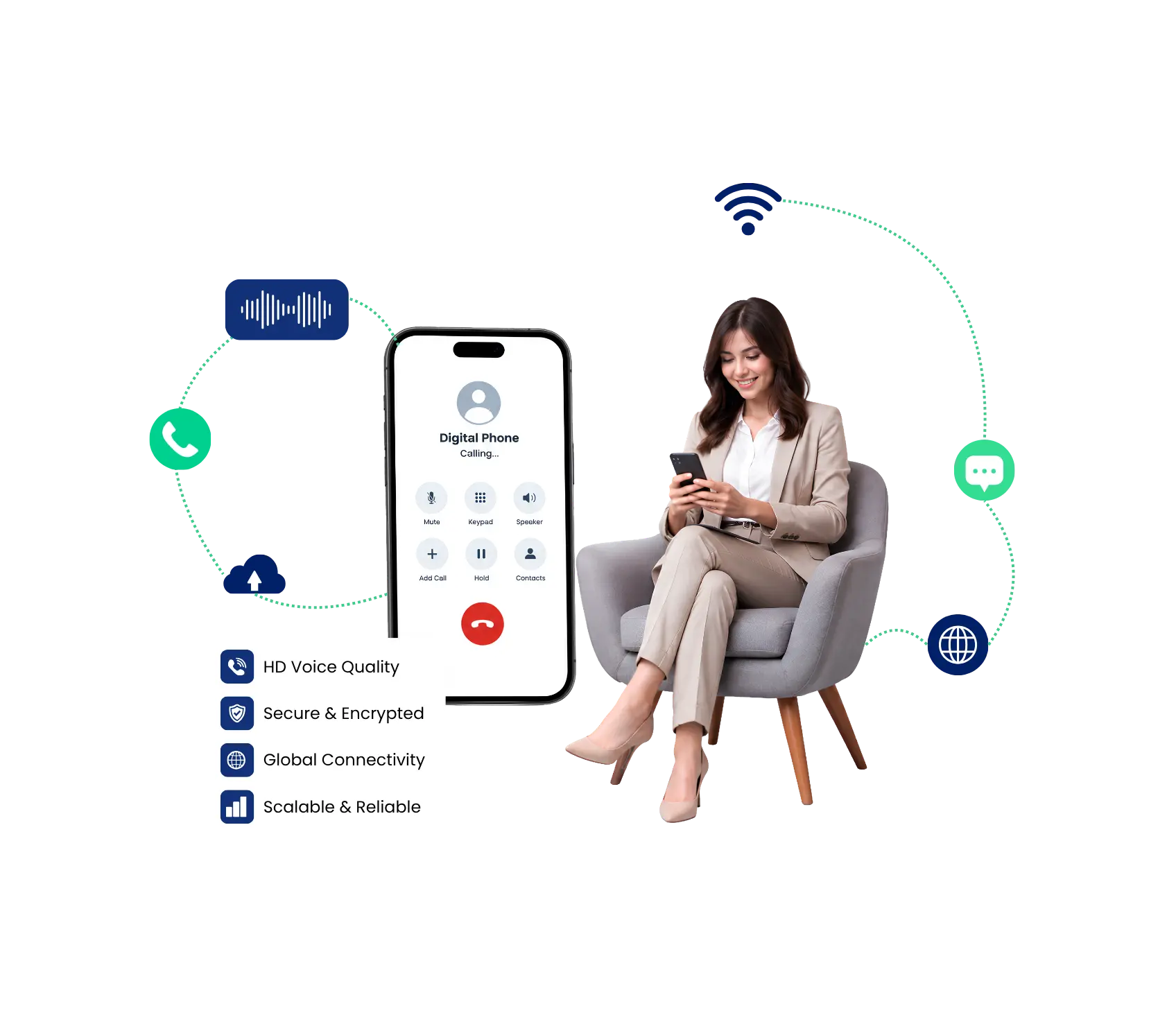
At its simplest, this kind of system turns your voice into digital data and sends it over the internet instead of through a physical phone line. That’s really the whole idea. No copper wiring buried under the street, no bulky phone box in the utility closet, just a stable internet connection doing the heavy lifting.
This matters more than it sounds like on paper. It isn’t tied to one location or one device the way an old phone line is. You can answer calls from a desk phone, a laptop, or a mobile app, all using the same number, and none of it depends on a technician showing up to run new cables. For a lot of people, this is the first time their phone number has actually felt portable, and it’s a small change that ends up making a bigger difference than expected once you actually live with it for a few weeks.
How Does It Work?
The process behind this kind of setup is simpler than most people expect.
Here’swhat really happens, step by step:
- You speak into the phone:Your voice enters the microphone as a normal sound wave like any call.
- It is converted into data: The system divides your voice into small packets of data, not into an analog signal.
- Voice travels over the internet:You don’t receive your voice on copper wires; you receive your voice over your internet connection.
- Data gets converted back to sound: On the receiving end, those packets reassemble into audio almost instantly.
- The call connects in real time: The whole process happens in a fraction of a second, so the conversation feels just as natural as any regular call.
This is the same basic idea behind a VoIP phone system, since Voice over Internet Protocol is the technology that actually makes digital calling possible in the first place. A VoIP phone system handles the conversion, transmission, and routing of your call, all without needing a dedicated phone line running to your building. As long as you have a decent internet connection, the call quality usually holds up just fine, often better than an old analog line ever did, especially once a provider optimizes the routing behind a VoIP phone system for fewer dropped calls, which is exactly what a good internet phone service is built to do.
Compare with Traditional Landline
This is usually where the decision becomes obvious. A traditional landline runs through physical copper wiring, tied to one location, with limited features and higher long-term costs. A digital phone service runs through the internet, works from any device, and usually comes packed with features the old setup never offered in the first place.
Here’s a simple way to think about it: a traditional landline is essentially just a dial tone. It rings, you answer, that’s about it. This kind of setup adds call recording, auto-attendants, voicemail transcription, and call analytics on top of the basic ability to make and receive calls. It also tends to cost less once you factor in installation fees, maintenance visits, and per-line charges an old line usually carries.
The one thing a traditional landline has going for it is that it doesn’t rely on an internet connection, which occasionally matters during a power outage. But for most homes and businesses today, the tradeoff isn’t close.It simply does more, and it usually costs less to do so, which is exactly why so many people compare the two once and rarely look back.
Switching from Traditional to a Digital Phone Service
Making the switch is a lot less complicated than people expect. Moving away from an old landline typically takes just a few steps:
- Choose a provider and pick a plan that matches how many lines or users you actually need.
- Port your current number over, so you continue to have the same number that your clients or contacts have.
- Configure devices, whether desktop, laptop app, or mobile app.
- Set up basic features such as voicemail, call forwarding, and business hours.
- Test everything before fully retiring the old landline.
Get a Dedicated WhatsApp Number
A dedicated number keeps things clean. Clients or teammates message the business, not a person, so nothing gets lost if someone leaves the team or switches roles. It also means the number can be shared openly, on a website or a business card, without exposing anyone’s actual personal line. For freelancers and small distributed teams especially, this is one of the easiest upgrades to make, and it usually takes less than ten minutes to set up.
We'd Love to Hear From You
Ready to expand your business globally?
Fill out the form below, and our team will help you choose the perfect number.
Key Features of Digital Phone Service
What makes a digital phone service worth switching to isn’t just the technology behind it; it’s what that technology actually lets you do.
A few features stand out:
Call forwarding and routing
Calls can move between devices or team members automatically, without anyone manually transferring anything.
Voicemail to text
Instead of listening to a voicemail, you can just read a quick summary.
Multiple lines on a single device
It doesn't require or no need for a separate phone for each number.
Mobile access
Answer your business or personal line from anywhere, not just from a fixed desk phone.
Reduce expenses
Most providers will offer lower monthly rates than a traditional carrier for long-distance calls or overseas calls.
In-built analytics
Call volume, missed calls, and response times appear automatically, without any additional software.
Presence Status
Instantly check if a teammate is available, busy, or offline before you even attempt to call them.
Number masking
Keep personal numbers private while still connecting two parties on a call.
These features aren’t just nice extras. They’re the reason this kind of setup tends to fit modern work patterns so much better than something built decades ago for a very different way of working, back when nobody needed to answer a call from three different devices in one afternoon. Under the hood, most of these features exist because a VoIP phone system was designed with software flexibility in mind from the start, rather than being bolted onto old hardware after the fact.
Dialinger a Better Service Provider
Why Businesses Are Shifting to Internet Phone Service?
Businesses have their own reasons for making this move, and cost is usually just the beginning. An internet phone service lets teams work from anywhere, which matters a lot more now than it used to. A sales rep working from home can use the same business number as someone sitting in the office, and customers never notice the difference on their end.
An internet phone service also scales easily, since adding a new employee doesn’t mean waiting on a new physical line; it usually just means adding a new user inside the same dashboard. On top of that, it typically comes with call analytics built in, showing call volume, missed calls, and response times all in one place, something that used to require separate software entirely. For a growing company, that kind of flexibility and visibility saves real time and money compared to the slow, hardware-heavy process that came with traditional phone systems.
If you’re weighing options, Dialinger is worth a look: it packs presence status, number masking, and a unified callbox into one dashboard, so teams get all of this without piecing together separate tools. You can book a demo to see how it fits your team before committing to anything. At the end of the day, a digital phone service isn’t really a trend; it’s just a better way to handle something every person and business already needs, and the old landline usually ends up sitting unused within the first month.
Frequently Asked Questions (FAQs)
What is a digital phone service?
It’s a phone system that sends your calls over the internet instead of copper wires, so you’re not tied to one physical line.
How does a digital phone service actually work?
Your voice gets turned into data, travels over the internet, and converts back to sound on the other end, all in real time.
Is a digital phone service the same as a voip phone system?
Pretty much, yes. Voip is just the technology that makes a digital phone service actually work.
Do I need special hardware to use a digital phone service?
Not really. A laptop, mobile app, or basic desk phone is usually all you need to get started.