How to Mask Your Phone Number and Protect Your Privacy
Most of us hand out our phone number without a second thought. We give it to a delivery driver, a stranger on a marketplace, a website that “just needs it for the receipt.” Then the spam starts, or a one-time contact keeps texting for months. If that sounds familiar, this concept is for you. We’ll cover how to mask your phone number, from a quick one-off trick to proper business tools, and we’ll keep it simple. You’ll see what masking really means, the methods that work, where each one falls short, and how companies use it at scale.
What Does It Mean to Mask Your Phone Number?
To mask your phone number is to show something else in its place when you call or text. The person on the other end sees a different number, a hidden caller ID, or a temporary line, and your real digits stay private. It’s a bit like using a P.O. box instead of your home address. People can still reach you, but they can’t find your front door.
There are two flavors. Some methods simply hide your number for a single call. Others swap it for a stand-in number that works for a while. People choose to hide your phone number for lots of reasons: safety, avoiding spam, keeping work and home life apart, or just not wanting a stranger to have a direct line. Knowing how to mask your phone number gives you a say in who gets your real one.
Here’s a simple example. You sell an old bike online, and a buyer asks you to text to arrange a pickup. You’d rather not give a stranger your real number. With a stand-in number, you can chat, hand over the bike, and close the line afterward. Nobody ends up in your contacts, and nothing follows you home.
How to Mask Your Phone Number
There isn’t one right way, so here are six that people actually use:
1→
Dial a blocking code before the call
In the US and Canada, typing *67 before the number hides your caller ID for that call. Other countries use different codes, so check with your carrier.
2→
Turn off caller ID in your phone settings
Most phones have a setting that hides your number on every outgoing call.The name of the menu will vary from phone to phone, so you’ll need to check under the call settings.
3→
Request that your carrier hide your number
Many carriers will block your number if you ask them to. Very convenient when you don’t wish to enter a code every time.
4→
Call and text from a different number
A calling app or virtual number provides you with the option of calling or texting from a different number, but your real SIM is out of sight.
5→
Use temporary or disposable number
A short-term line is suitable for a single time task, such as selling an item online or taking a ride.
6→
Choose a business masking service
For companies, a service creates a temporary proxy number for each conversation, so staff and customers never see each other’s real numbers.
None of these is perfect on its own. A code or a setting is quick but only lasts as long as you remember to use it, while an app or a service takes a little setup but gives you far more control. Pick the one that matches how often you need privacy, and how much hassle you’re willing to put up with.
We'd Love to Hear From You
Ready to expand your business globally?
Fill out the form below, and our team will help you choose the perfect number.
What Is Number Masking and How Does It Work?
The term masking is defined as a privacy technique that allows two people or individuals to communicate through a stand-in number so that neither party can see the other’s real number that maintains the security and privacy. Think of it as a switchboard operator who patches the call through without sharing anyone’s details. Companies use it a lot, because they can protect customers and staff at the same time, without anyone doing it by hand.
Here are the 5 steps to follow:
- A call is requested: A customer or employee initiates a call through an App, website or CRM.
- A system assigns a temporary number: A proxy number is assigned for that conversation.
- Both parties see the proxy: Each party’s call displays the stand-in number, instead of the actual number.
- The call is directed:The platform performs the connection of the two real phones behind the scene.
- The number expires:Once the conversation is finished, the proxy is retired and no one can continue to use it to contact the other.
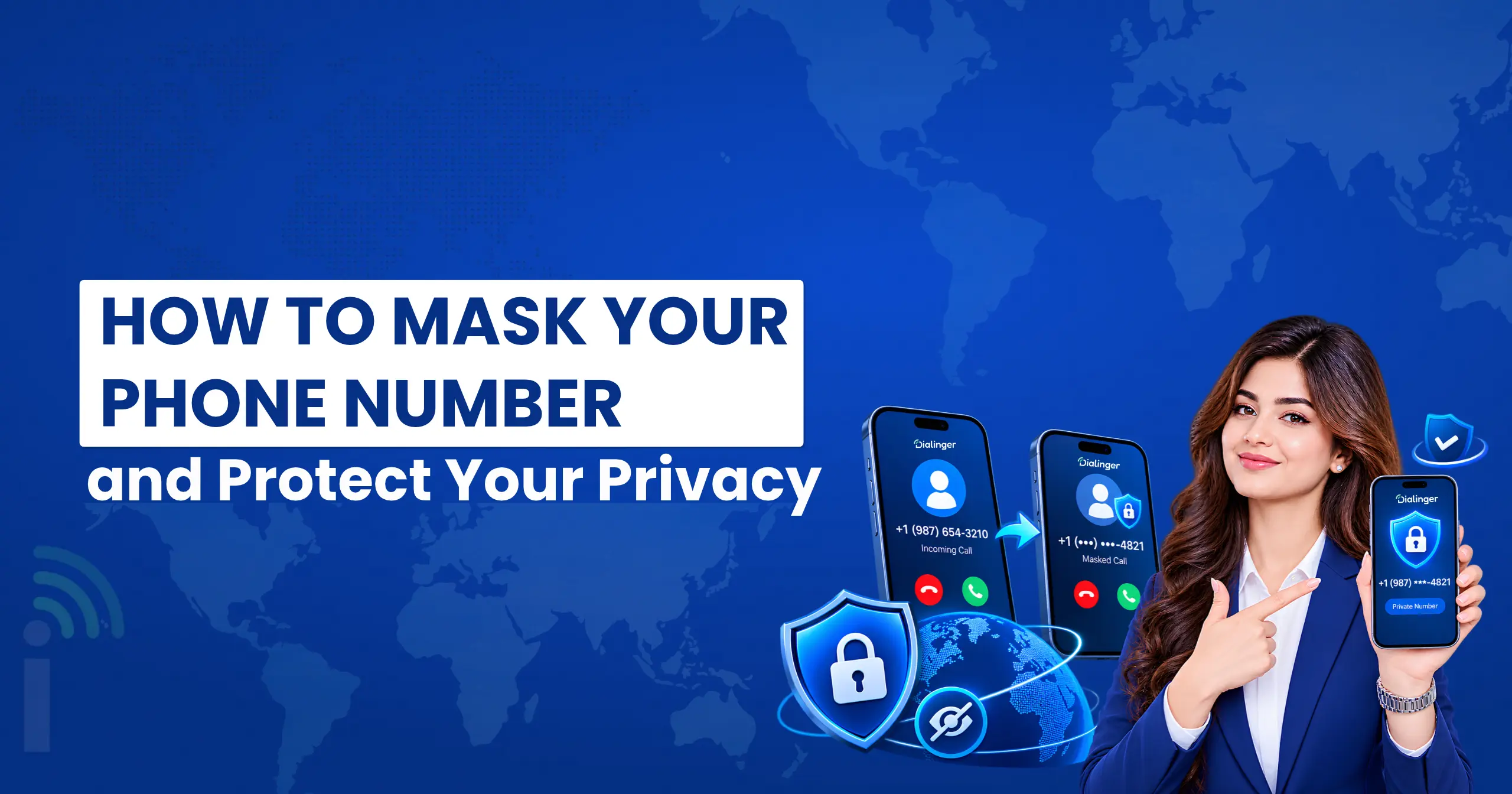
Benefits of Using Phone Number Masking
Hiding your digits isn’t only about secrecy. It makes communication safer and often easier.You may not be sure if it’s worth it, so here are the top benefits and the reason it’s worth knowing the proper way to mask your phone number:
Improved personal security
Individuals who you don't know don't get your true number or a means to find you.
Less spam and less scam call
Your actual number is not added to marketing lists or dubious databases.
Clear boundaries for work and personal life
Cell phone for business, home phone for personal.
Customer trust is increased
Companies which ensure that numbers are protected appear careless and professional.
Compliance Made Easy
With regulations such as GDPR and CCPA imposing strict limitations on the sharing of personal data, masking is one way to help companies comply.
Control over who contacts you
When a temporary line expires, the conversation ends on your terms.
How Does Call Masking Protect Personal Information?
Call masking works by keeping your real number out of the conversation completely. Your number isn’t just hidden from view. It never reaches the other person’s phone, their contacts, or their call log at all. That matters because a phone number is more than a way to ring someone. It can be used to find your social profiles, look up your name, send spam, or track you across websites. By cutting that link, call masking protects the personal details that tag along with it.
Here are the four main ways it helps:
- It stops contact after the job is done: Temporary numbers expire, so a delivery driver or a seller can’t keep texting you next month.
- It keeps your identity separate: The person at the other end can’t go on to search your number to see who you are.
- It minimizes the amount of spam and scams:If a masked line is misused, you don’t have to worry about losing your actual number.
- It provides a safer log for companies:Calls can be recorded and checked without anyone’s private number being revealed.
What Is a Masked Phone Number?
A masked phone number is a number that has been replaced with another number on a call or text message instead of your actual phone number. It might be a temporary number made for a single conversation, a virtual number you keep for work, or a hidden caller ID that lets you hide your phone number by simply showing “Private” or “No Caller ID.” When someone calls the stand-in, the service quietly forwards the call to your real phone, and the same thing happens in reverse. The other person only ever deals with the substitute. A masked phone number can last a few minutes or a few months, depending on the tool and what you need it for. That’s the heart of how to mask your phone number: swap the number people see, and keep the real one tucked away behind it.
How to Hide Your Phone Number When Making a Call
If you just need to have privacy for one call, you don’t need to use special software. If you wish to hide your phone number at one time, try using these four methods, the easiest of which are the first two:
Precede the number with a code
Dial the blocking code (e.g., 67 for the USA and Canada) followed by the number to be dialed.
Calling from a different app or number
When someone calls from a calling app, it displays the calling app's number, rather than your SIM's number.
Call from a different app or number
A calling app or virtual number shows its own number instead of your SIM's number.
Ask your carrier
They can often block your number by default. It's useful if you don't want to remember a code.
One warning. Some people won’t answer a blocked number, and some businesses reject them. Toll-free lines and emergency services may also see your number no matter what you do. If you need people to pick up, a stand-in number often works better than a blocked one, which is a smarter side of how to mask your phone number.
Common Use Cases of Phone Number Masking
Anywhere strangers talk briefly, masking helps. Here are six places you’ll see it, and they all depend on companies knowing how to mask your phone number for their customers and staff. A good deal of this relies on call masking behind the scenes:
- Ride-hailing and taxis: Drivers and riders can call each other without swapping personal numbers.
- Delivery and logistics: Couriers can reach customers about an address without keeping their numbers afterward.
- Online marketplaces: Buyers and sellers can arrange a meetup without handing over private numbers.
- Healthcare and telehealth: Medical practitioners and patients can discuss matters without having to expose personal mobile phone numbers.
- Customer support:Agents can have a company phone number to call customers, keeping their personal numbers confidential.
- Recruitment and HR: Recruiters and candidates can communicate without giving their personal contact information.
The pattern is the same each time. Two people who don’t know each other need to talk for a short while, and neither wants the other to keep a direct line afterward. Masking gives them exactly that, and then it quietly closes the door.
Where Dialinger Fits In
If you’re a business that needs to know how to mask your phone number properly for customers and staff, Dialinger offers masking directly. Its number masking feature connects callers through temporary proxy numbers, so neither side sees the other’s real number. Those numbers are created for each session and expire afterward. The calls are directed in real time and you can see call activity using call analytics. It is also API-enabled with your CRM or app, available on Android, iOS and Web. You can combine this number with a virtual phone number or a custom caller ID from your team to use a masked phone number.
Frequently Asked Questions (FAQs)
Is phone number masking legal?
For the most part, yes. Hiding your number to protect your privacy is perfectly normal. Where it becomes a problem is when someone uses it to scam, harass, or mislead people. Laws differ from country to country, so it’s worth a quick check of your local rules. Businesses should also keep privacy laws like GDPR and CCPA in mind.
Can someone trace a masked phone number?
The person you’re calling can’t, at least not from what shows on their screen. Your carrier still keeps its own records, though, and law enforcement can request them through the proper legal channels if something serious is going on, like threats or a crime. So masking keeps your number away from other people, but it isn’t a way to hide from a legal investigation.
Is number masking the same as hiding caller ID?
They sound alike, but they’re not the same thing. Hiding caller ID just shows “Private” or “No Caller ID” on the other person’s phone, while the call still comes from your real number. Number masking swaps your number for a temporary stand-in, so the other person can call or text back without ever seeing your real digits. That makes masking a lot more practical for everyday use.
Can businesses use call masking for customer communication?
They can, and plenty already do. Call masking lets customers and staff talk to each other without either side sharing a personal number. Each conversation gets its own temporary number that expires when it’s over, which keeps everyone’s details private and makes calls easy to track.